
















Welcome to the MANAGING TECHNOLOGY Section of
Dennis McDonald’s Blog
Please scroll down for posts on Collaboration, Strategic Planning, Project Management, Disaster Response, R&D Management, Expertise Management, Knowledge Transfer, Mergers & Acquisitions, Associations, Personal Data Ownership, Social Network Portability, and Digital Rights Management. A complete list of topics is here. To browse use the above links or those on the left side of this page. To search for specific topics use the “search this site” box.
Weekly Top Ten
For the period April 30 through May 8, 2008, the following are this blog’s “top ten” Managing Technology posts, ranked in descending order by the number of unique pageviews recorded by Google Analytics:
How Corporate RSS Supports Collaboration and Innovation
If you haven’t seen it yet, check out corporate IT manager Jim MacLennan’s RSS: Underappreciated Web 2.0 in the Enterprise blog post.
Comparing Apples and Oranges: Linkedin and Facebook
Lunn comes out pretty clearly with the view that Linkedin is better for business use than Facebook. I agree — but I knew that six months ago.
Sometimes No Links are a Good Idea
My 5-year-old neighbor uncupped his hands to reveal the contents and asked, “Can you tell me what this is?”
One Thing I Don't Like About Twitter
I’ve already written positively about my use of Twitter. Here I write about a pet peeve: the popular practice of reporting on conference sessions via Twitter.
What Happens When 20-Somethings Settle Down?
We’ve all seen the lists of things that differentiate younger generations from older generations. Here’s my own:
- They’ve grown up with cellphones and text messaging.
- They don’t know how to play phonograph records.
- They share private details online in ways that horrify their parents.
- They expect instant electronic access to the web wherever they are.
- They expect to take their music wherever they go and play it whenever they want.
- They carry on multiple conversations and keep track of multiple media streams while doing their homework.
- They can’t remember a time when space travel was science fiction.
- They think nothing of carrying on a conversation with kids in other countries.
- They can’t imagine a time before Google or Wikipedia.
- Many know a kid who has died from a car accident, a drug overdose, or a shooting.
- They expect to upload and distribute both audio and video programming that they create themselves (or copy themselves - take your pick).
- They think email, newspapers, and nightly TV news are for old people.
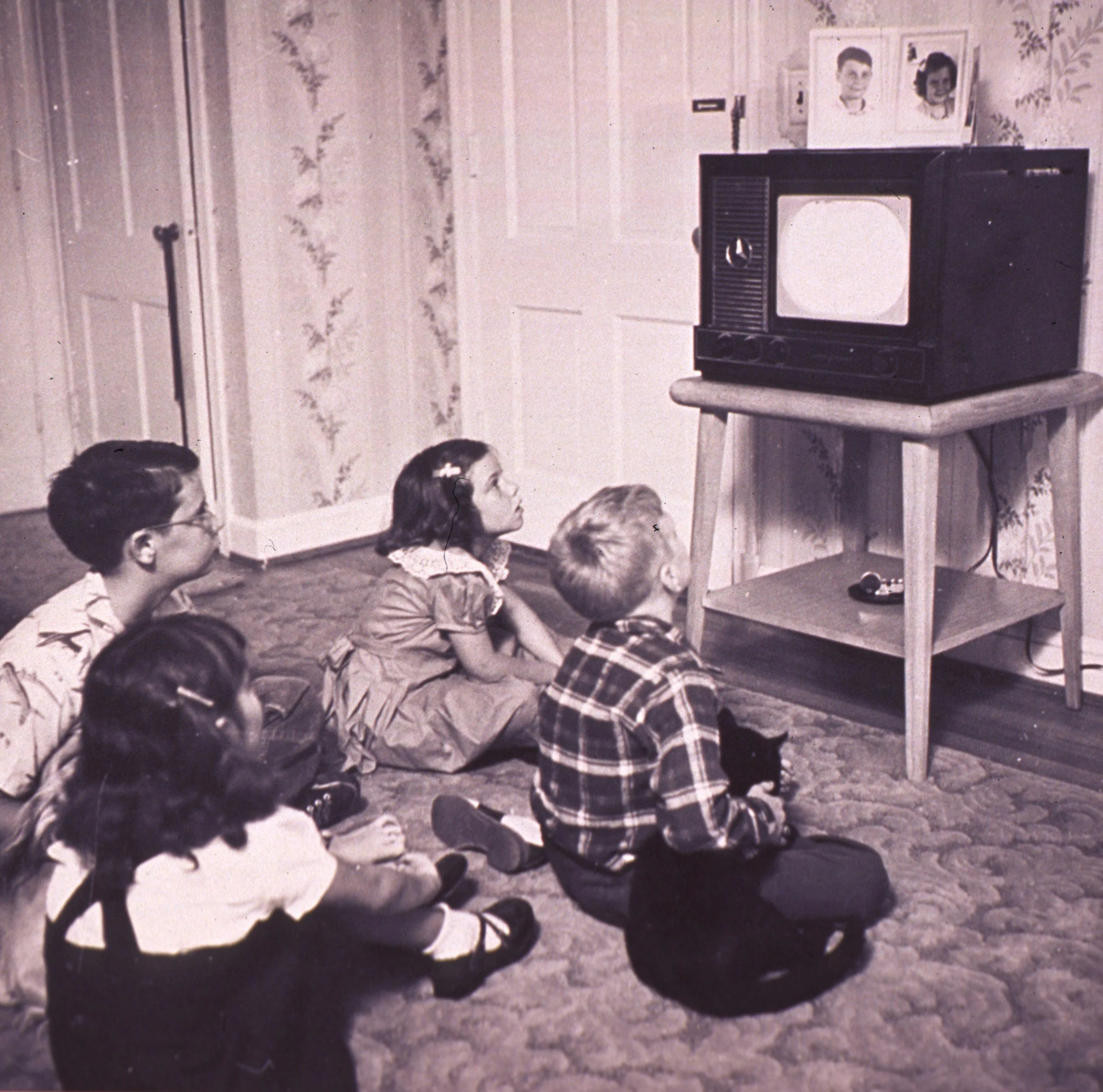
Every generation has a list like this. Heck, I can remember growing up in a household that possessed a single black and white television.
What differentiates the current younger generation from previous ones is the constant connectedness. It’s also the expectation that feelings, attitudes, and experiences can be casually shared with individuals that have never been met face to face.
Today’s artificial shared intimacy is different from the synthetic 3D worlds envisioned by early cyberpunk pioneers and the Wachowski Brothers. But it does create a set of expectations among young people about how they interact with others.
One question is, what happens when today’s young people “settle down” to real jobs, careers, families, home ownership, and debt? Do they carry their expectations of shared artificial intimacy into these next stages of life? Will they abandon them? Or will they evolve them to suit their circumstances?
I can remember the circumstances surrounding various stages in my own life — the first mortgage, the first house, worries about property values, choosing private school vs. public school, fundraising drives, neighborhood watches, car pooling, play groups, prom night fears, eventual college applications.
What was once predictable mind-deadening conversation at demographically homogeneous cocktail parties is now the stuff of Facebook groups. There, details are shared on how to game the enrollment auction at the local over-subscribed high-status pre-school — you know, the one where failing to get your 4-year-old accepted significantly reduces his or her chances at getting into Harvard or Yale?
There’s another possibility: the children of those now entering the work force might decide they want to reduce electronic connections in order to “live life off the grid.”
This might come as a reaction to parents who use social networking and social media to share information electronically about the status of their kids (“TWITTER: Know whose kid I saw smoking by the creek today while charging our solar car?”)
People might also become fed up with how government and business can so easily track electronic behavior since evolving data portability standards might end up being used for reasons other than the sharing of information among friends and acquaintances.
By the time organized resistance to the sharing of personal information becomes a movement, though, it may be too late. By then, cash may have disappeared completely and the difficulty of subsistence living in a barter economy may be too much to bear for the children raised by today’s wired youth. What happens then?
- Copyright (c) 2008 by Dennis D. McDonald
Is "My Dow Network" a "Social Network"?
I recently spoke with Trish Bharwada of The Dow Chemical Company. Trish manages My Dow Network, a web-based online membership service launched in 2007 that targets retirees and former employees of Dow.
Some Suggestions for Fixing Corporate Email
In my recent post Questions to Ask Before Replacing Corporate Email I listed questions management should ask about corporate email to help plan for adoption of more modern collaborative software applications. The idea behind that post was simple:
Howlett Makes Some Good Points About Enterprise Web 2.0 Adoption
Dennis Howlett’s The poverty of enterprise 2.0 and social media, once you get past the hyperbole of the title and ZDNet’s antiquated requirement to register in order to leave comments, makes some good points.
Dennis McDonald's Personal Facebook Saga
I’ve been reducing my use of Facebook recently having found it to be less useful — and less easy to use — than other social and professional networking tools.

