Managing the Flowchart: AI, Complexity, and Control
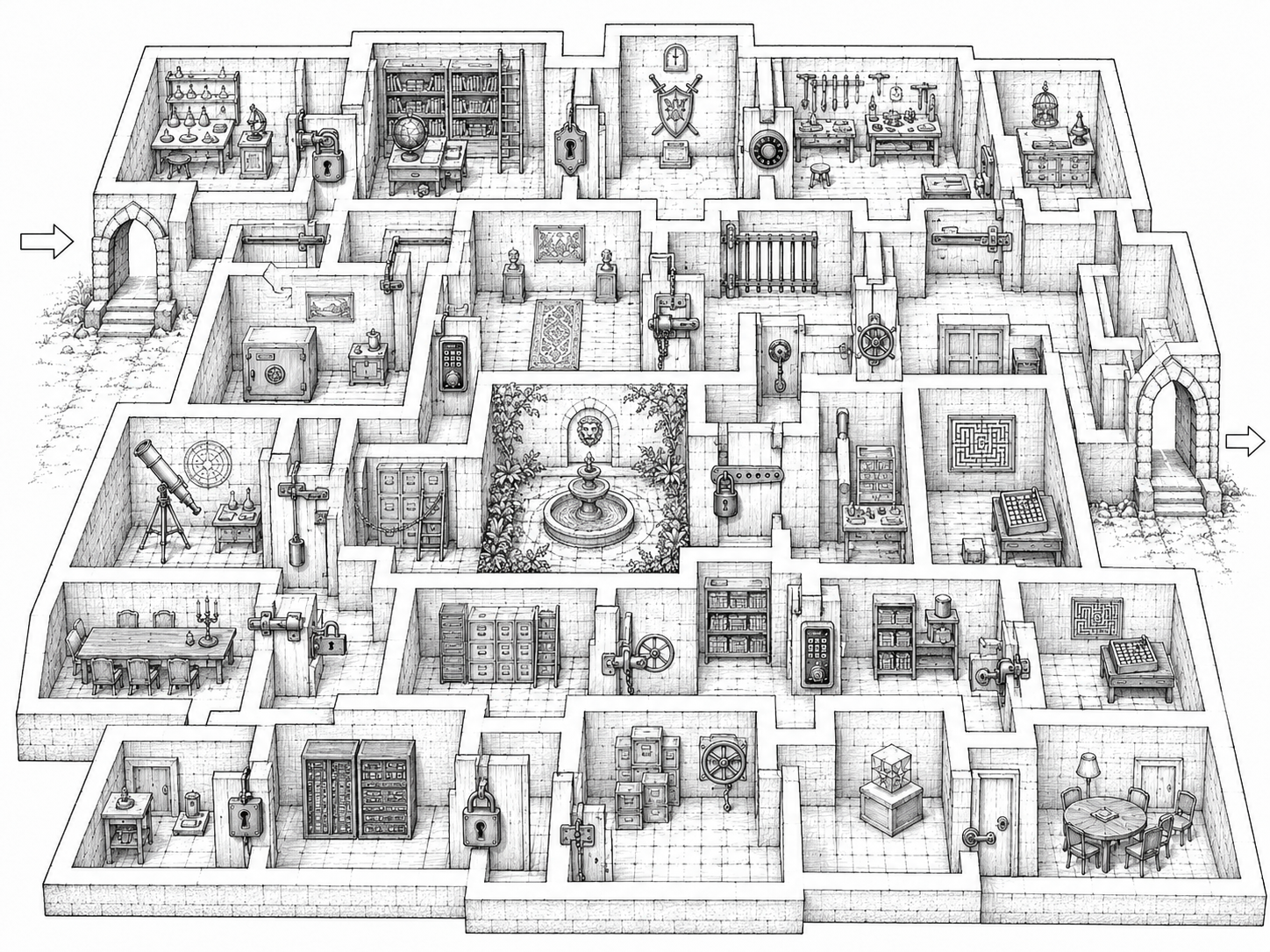
Once upon a time, I saw a massive flowchart that purported to show, from start to finish, all the systems, processes, participants, relationships, decision points, and workflows involved in developing and procuring a Navy weapons system.
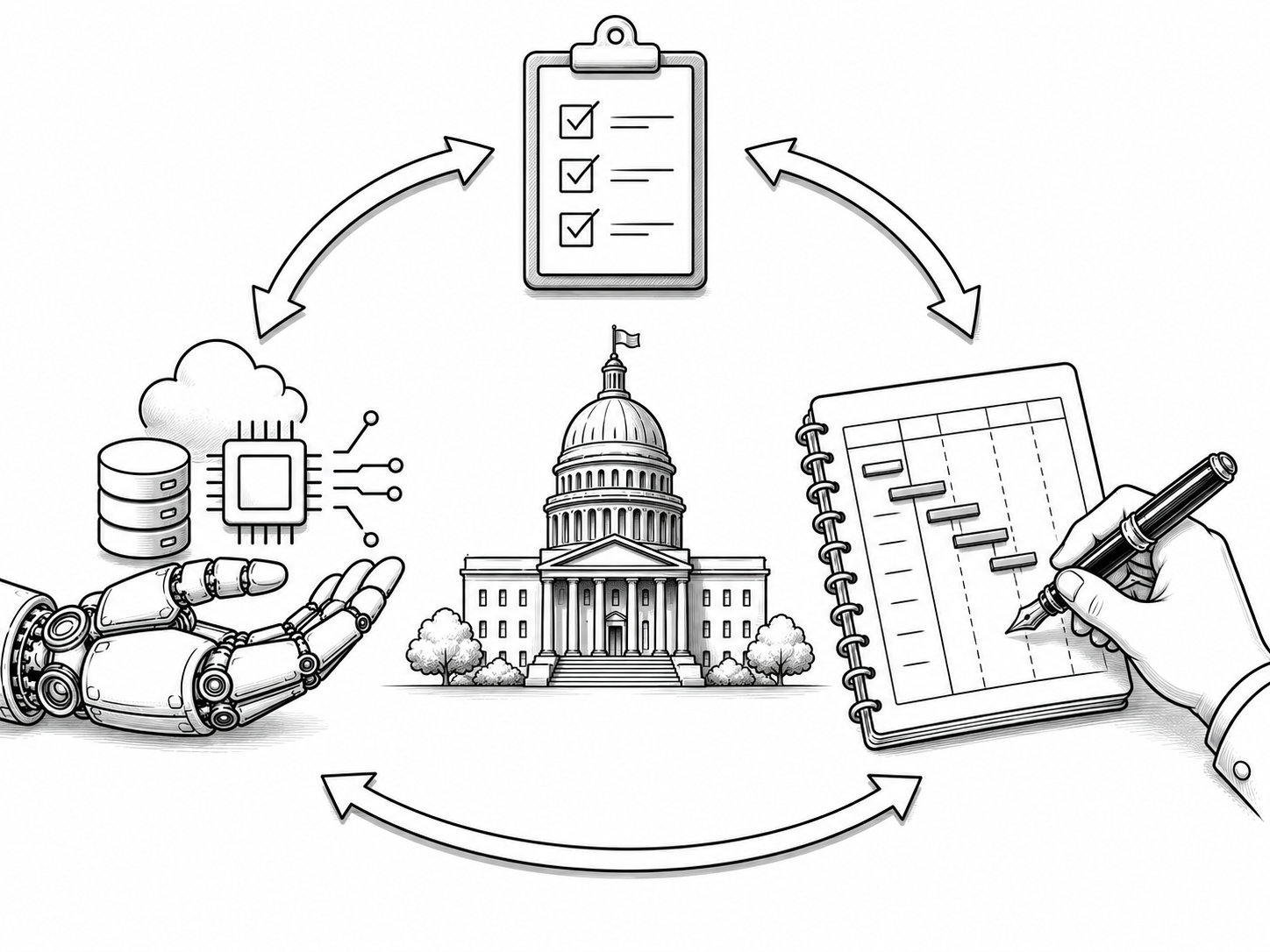
Such an artifact must constantly evolve as people, laws, regulations, and technologies change over time. Keeping something this complicated up to date requires a lot of time, attention, and automation. That suggests the likely value of using AI to help management oversee and coordinate everything.
AI-aided systems can significantly improve how humans process and control many constantly changing data streams, both for adherence to plans and for detecting deviations from plans.
Deciding whether such systems are “bad” or “good” is not my focus here. I am already a firm believer in using AI tools intelligently. Instead, my focus is the potential impact of such systems on how complex processes are managed, given one simple and annoying fact: our inability to predict the future.
Unexpected things happen. Things break. People get sick and die. Accidents and natural disasters occur. The weather — or the competition, or the enemy — does something unexpected.
Sure, an AI-supported system might be able to respond to such events more quickly. But as someone with years of experience, I would question how much autonomy to give such a system in controlling how it responds to the unexpected. For example, we all know that mistakes and even disasters still occur in space exploration, no matter how many safeguards, workarounds, backup systems, and procedures we build in to manage the unexpected.
I like what Sangeet Paul Choudary says in his paywalled Harvard Business Review article, “AI’s Big Payoff Is Coordination, Not Automation”:
Over the past decade, my work has focused on designing platforms to organize and coordinate fragmented systems. But until recently, that kind of coordination had a hard limit: It depended on highly structured data and clean interfaces, which required consensus on standards and workflows. In practice, most systems varied too widely to align, so coordination remained manual and expensive. But AI’s translation capabilities have removed that limit. The new kinds of coordination that it enables are changing not just workflows but also the nature of value creation and competition in fragmented industries.
As Choudary suggests, AI-based “translation” can make obsolete the old concept of systems integration via controlled and standardized interfaces, which are difficult and expensive to maintain.
I say “can make,” not “will make.” We have to factor in the potentially significant transition costs of moving to AI-dependent system and process coordination. I’m thinking here of my own experiences with moving toward processes that require coordination and transition across traditional departmental boundaries. The politics of such changes can be fierce, especially for someone trying to sell technology-based changes into such an environment when the actual financial benefits are not immediately apparent — or cannot be accurately predicted.
That’s not to say that some organizations are not taking advantage of the transformative nature of AI-based systems, as discussed in How AI Is Changing Government Procurement. Government procurement may have a reputation for being old-fashioned and stodgy, but some government agencies are recognizing the potential for what Choudary describes.
Copyright © 2026 by Dennis D. McDonald. Image created with assistance from ChatGPT Plus Image Generator (OpenAI).