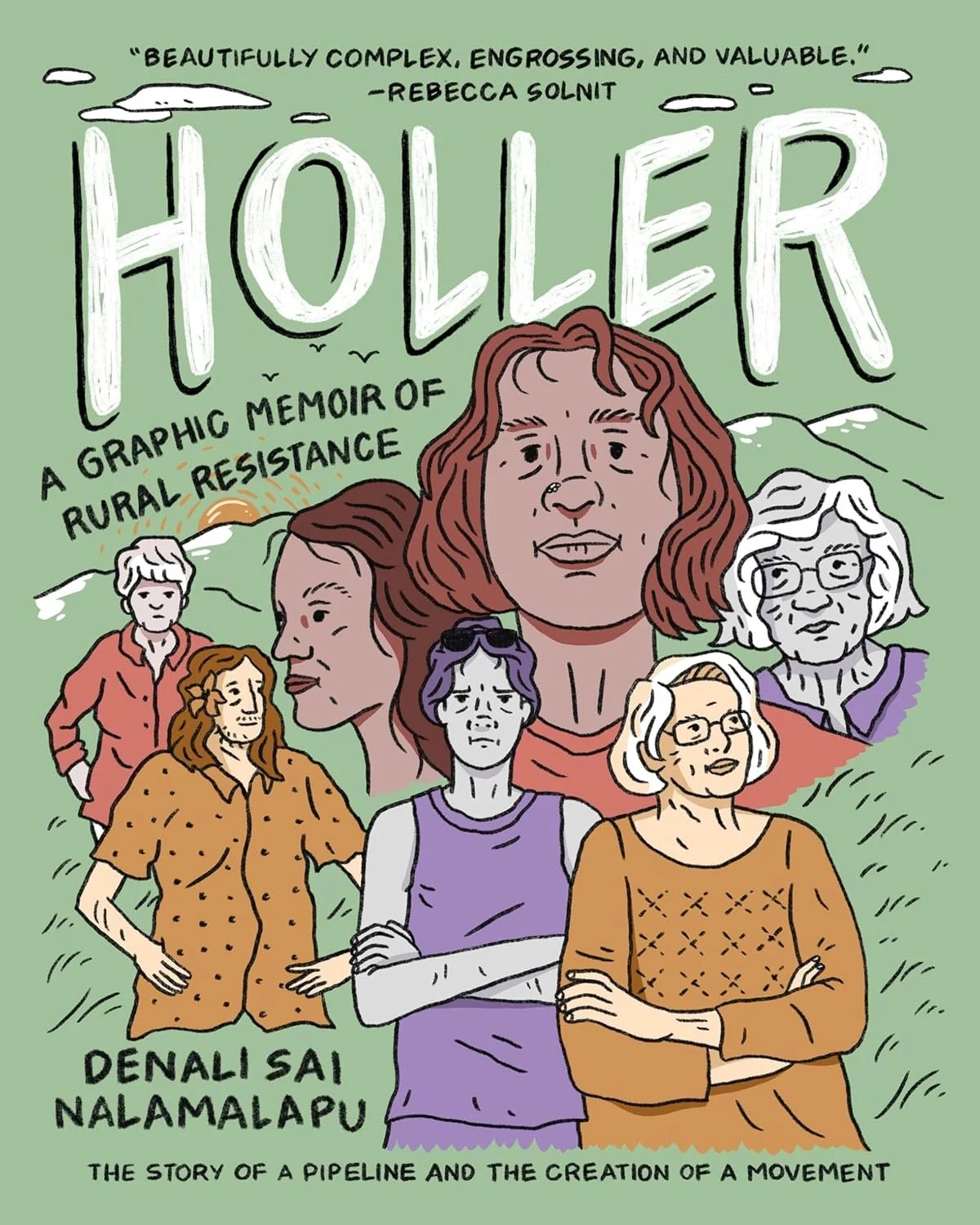
Denali Sai Nalamalapu’s “Holler: A Graphic Memoir of Rural Resistance”
Review by Dennis D. McDonald
This account of resistance to the construction of the Mountain Valley Pipeline across West Virginia, Virginia, and North Carolina is a classic story of “the little guy versus the machine.”
Here, the “little guy” is represented by six individuals graphically profiled by the author, each connected to the land disrupted by the pipeline and engaged in grassroots efforts—ultimately unsuccessful—to resist its construction.
The stories, simply yet effectively told and illustrated, highlight the almost spiritual connection people have to their homes and the trauma caused when “outsiders” disrupt that connection for corporate, economic, and environmentally destructive purposes. It’s not a “feel good” story; it’s a “feel deeply” story. The author draws powerful emotional links between the land and the personal decisions made to protect it from destruction.
The book’s focus on the personal stories of anti-pipeline activists is both a strength and a limitation. On the one hand, it brings their struggles vividly to life. On the other, it makes no attempt to present the opposing perspective, such as the purported benefits of the pipeline. Critiques of capitalism and big government are common enough, but they gain weight here through the intensity of the personal narratives.
Still, it’s difficult not to sympathize with the six characters’ anti-pipeline views. Attempts to “both sides” complex and destructive issues often amount to a refusal to take a stand for fear of offending—an approach typified by recent milquetoast Washington Post Editorial Board editorials. Such neutrality frequently becomes tacit support for injustice, a prelude to the inevitable “I didn’t think a leopard would eat my face!” realization.
The rich and powerful may dismiss the individuals portrayed in Holler. They may also assume their financial resources will shield them from environmental collapse. But books like this remind us that environmental destruction cannot be ignored, no matter how insulated one believes oneself to be.
Review copyright 2025 by Dennis D. McDonald
Graphic Novels & Memoirs