I am reminded that at one time in the past the idea that EDI standards for electronic interchange of detailed product information was viewed as science fiction. Now modern industrial supply chains cannot operate without EDI. As we stumble towards a world where communications are tied into an interconnected semantic web, will we also see similar kinds of structure evolving in our personal and social communications?

What's the Difference Between Innovation and Creativity?
I’ve been listening to Phil McKinney’s Killer Innovations podcasts. I am trying to understand how social media and social networking can contribute to innovative practices within an organization. One important impact might be the manner in which “innovation” is managed.
I'm an independent consultant. I move from place to place a lot. Sometimes I hook into a client's network, sometimes not. I'm constantly on the web and I'm increasingly using web based resources to support my work.
Alex Iskold has an interesting analysis in his article LinkedIn and The Impending Challenge of Facebook. He presents data that compares and contrasts Linkedin and Facebook, two widely usedbsocial networking systems.
I recently demonstrated social networking and social media concepts to a group of professionals via a special version of this blog. I showed among other things how easy it is to locate RSS feeds and subscribe to them as well as the various ways you can view them. I even showed how easy it is to see what Netflix DVDs I have at home, courtesy of a special RSS feed.
In retrospect I realize how confusing this topic can be to some people who are accustomed to the concept of “web sites” and “web pages.”
Microsoft investor Seth Jason of the Motley Fool has a scathing review of how wireless file sharing has been implemented on Microsoft's Zune.
This past week, instead of using PowerPoint, I used this blog to deliver a private presentation to a group of professional association executives to point out possible applications of “web 2.0” technology to enhance member services;
Jeremiah Owyang has a good rundown of current discussions among PR and media luminaries about whether social media are "adopted" or not.
My initial response: "So, what else is new?"

I'm Almost Finished Deleting All My Email Subscriptions
One of the things I’m doing to get control of my email is to cancel subscriptions where I receive unrequested broadcast or narrowcast emails from individuals, organizations, or news services. My goal is to dedicate my two main email addresses to personalized incoming and outgoing communications. I am making progress toward that goal.
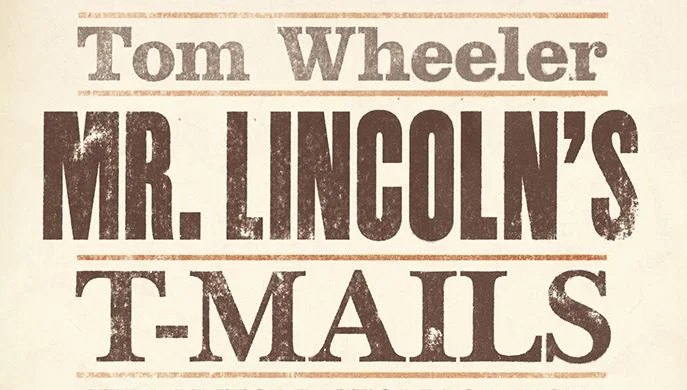
Mr. Lincoln's Telegraphy Practices and Modern Email
A while back I published an announcement about a new book by Tom Wheeler called Mr. Lincoln’s T-Mails: The Untold Story of How Abraham Lincoln Used the Telegraph to Win the Civil War. Tom sent me a note suggesting I also check out the book’s web site, which is here.
One of the things listed on the web site is a discussion of how Abraham Lincoln used telegraphy and how this might relate to modern usage of email.
“Most Folks Belong to Several Communities” — this is one of the points made by Jeremiah Owyang in his discussion of replacing the term “Audience” with ‘Community.”
I've used Google Analytics to see what keywords were most popular in searches that resulted in visits to All Kind Food in 2006.
Is there such a thing as "social networking fatigue"?
Luis Suarez thinks so. He wrote about it recently in Your Single Social Network - ClaimID and Identity 2.0 to the Rescue?. Here's an extract of what he said:

How Involved Should Customers Be in Managing Their Own Technical Support?
Last week I wrote about my experiences when my main laptop computer died. The bright spot was that I learned about the value of remotely-sourced database access through my use of DabbleDB. The dark side: my experience with my computer vendor’s Gold service plan.
Looking back, I can see advantages and disadvantages of using social media and social networking technologies as components in overall customer and technical support situations.
Rummaging through Google Analytics I've captured some more information about visits to this blog, All Kind Food, during 2006.

Abraham Lincoln and the Telegraph
If you are a fan of the history of technology, this new book might interest you. Bob Willard has been kind enough to forward to me information about Tom Wheeler's book Mr. Lincoln's T-Mails: The Untold Story of How Abraham Lincoln Used the Telegraph to Win the Civil War.
I used Google Analytics to generate this graphic which displays, as far as I can tell, the network locations of visitors to All Kind Food during 2006. One major disappointment: Antarctica is not here.

Who Is Writing and Reading Online Tech Magazines?
Dian Schaffhauser’s post If I Were Editor… in Sourcingmag.com’s Blogosphere takes online magazines (such as eWeek, InformationWeek, InfoWorld, and CIO) to task for an interesting reason:

When a Laptop Dies: A True Tale of Business Continuity, DabbleDB, and Apple iTunes
Sometimes it's good to have everything in one place. Sometimes it's a good idea to have everything spread around. And sometimes having all your eggs in one basket will bite you.
I was reminded of this earlier this week when my main laptop died. I was able to rapidly switch to two backup machines for most of what I needed to do while waiting for the Dell technician. In the process I observed a few things that are worth noting.

Overlapping and Evolving Online Communities are becoming the Rule, Not the Exception
I received an email last night from a reader of this blog asking me to comment on cost estimates he had received for the development of a new social networking service. He wants to offer targeted services to a specific but large population segment.
His thinking corresponds with a lot of interest people have these days for applying social networking techniques in a profitable or meaningful way to different population groups — young people, old people, professionals, managers, sports enthusiasts, podcasters, jobseekers, lonely hearts — you name it. If there isn’t already a MySpace/YouTube/Linkedin clone targeting any group that can write a check or reach a keyboard, there soon will be.