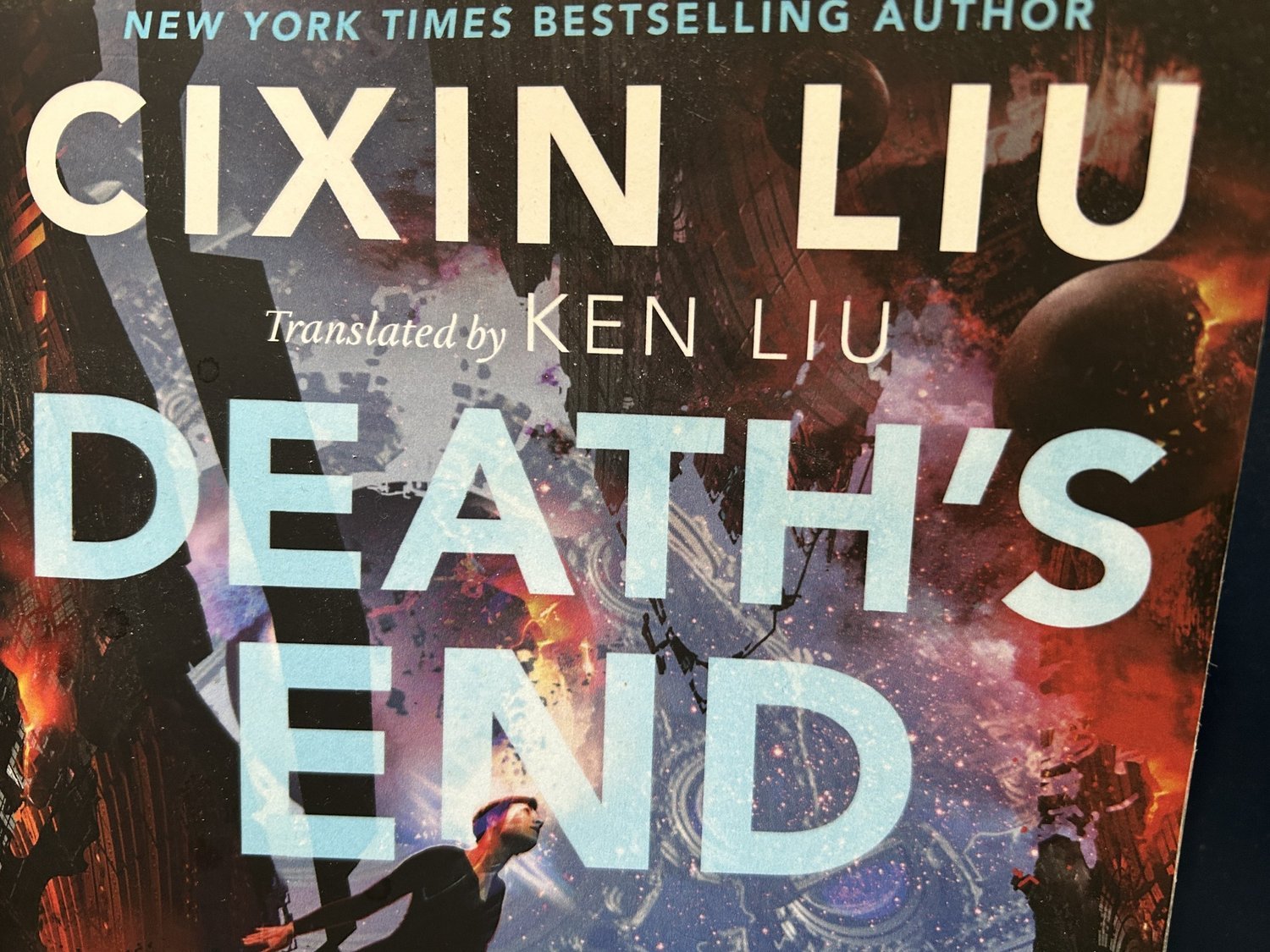
Cixin Liu’s “Death’s End”
A Book Review by Dennis D. McDonald
Note — this review expands on an earlier partial commentary, First Thoughts On Cixin Liu’s “Death’s End”
In this commentary, I first focus on the role that communication plays in human and cosmological events as related in the three books of Cixin Liu’s Remembrance of Earth’s Past trilogy, of which Death’s End is the third. How the author uses communication in these books is at times surprising and even breathtaking.
In book one, The Three-Body Problem, the use of the sun to transmit an interstellar message made my jaw drop.
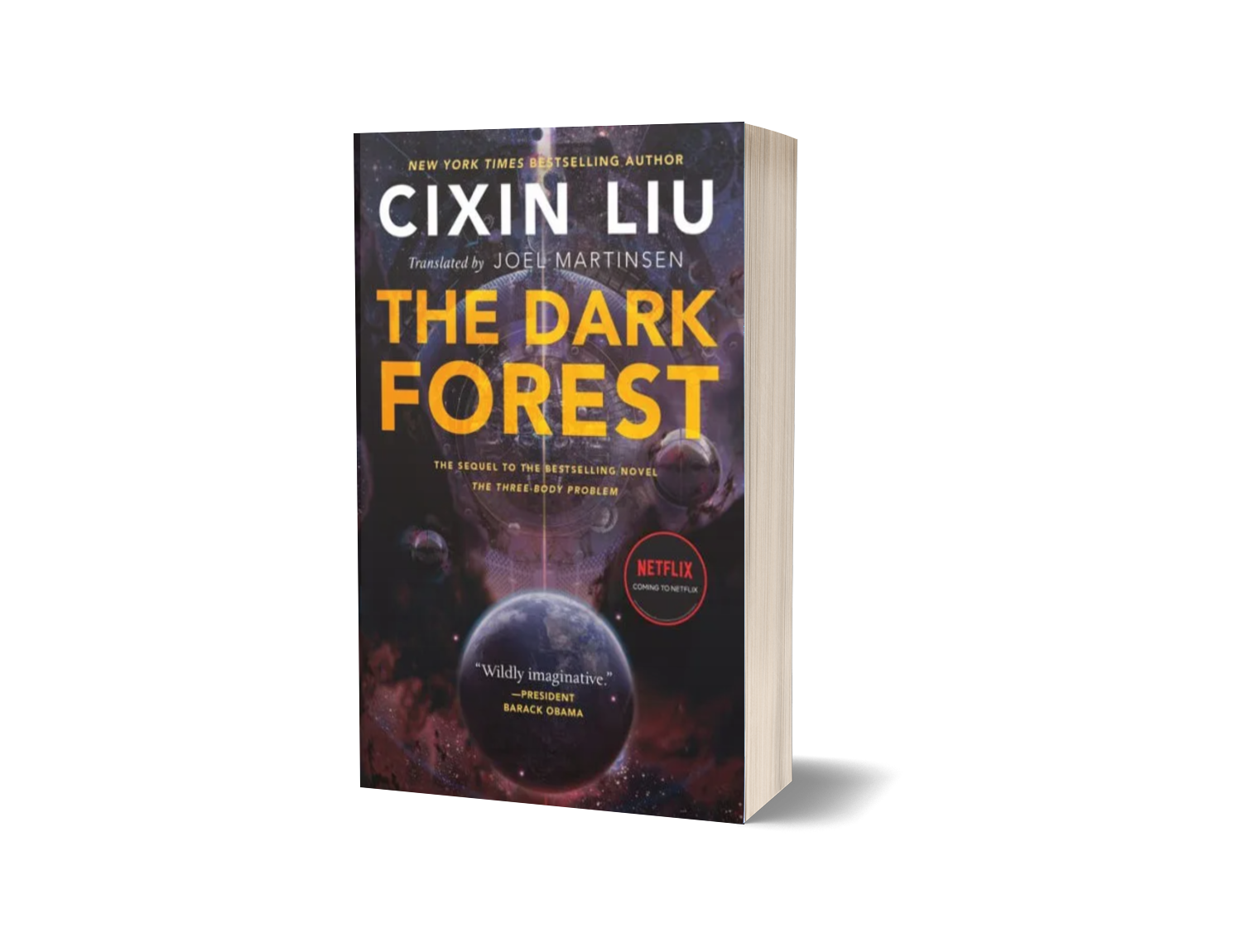
In book two, The Dark Forest, the plot hinges on who knows what, and when, about the intentions of a potential adversary.
In book three, Death’s End, gravity-wave broadcasting serves as both a deterrent and an instigator of interstellar conflict.
Aside from the imaginative science behind these communication plot points, is the importance of communication—or lack of it—in human history at all surprising?
Obviously not. Look at the sometimes acrimonious historical debate about whether the United States could have prevented Japan’s disastrous attack on Pearl Harbor during World War II. Assuming FDR did not know about the attack in advance, what communication breakdowns prevented decision-makers in the United States from being better prepared?
These hypotheticals are considerably different from the tale that Cixin Liu spins. He even makes almost-perfect, real-time, faster-than-light communication part of the story through the sophons, which illustrate how higher-dimensional physics becomes central to the ways civilizations interact.
Even more significant than the obvious importance of communication to the story is the way communication is flavored by the related issues of trust and truthfulness. Just because we receive a message, how do we know it is true? How can we know that the source of the message is being honest? In Liu’s trilogy, the fate of worlds—literally—can hinge on these issues of trust and honesty.
Here on today’s Earth, we see such questions being played out daily in both interpersonal and international relations. Knowing who and what to believe in international negotiations, for example, can be almost impossible, even though these events may hold life-and-death implications.
Deception also becomes increasingly important as Death’s End progresses. Communication between civilizations does not necessarily lead to understanding or cooperation. It can instead reveal a civilization’s location, vulnerabilities, intentions, or very existence. The exchange of information becomes inseparable from the possibility of destruction.
One senses that the author is accomplishing three tasks here in Death’s End:
Tying up loose ends.
Letting his imagination about classical and modern physics run wild.
Painting a somewhat gloomy picture of how interacting human and alien cultures inevitably come into conflict.
His vehicle for accomplishing these tasks is a small set of human characters who, due to periodic “hibernation,” witness—and in some cases participate in—the vast story that courses through the three novels over thousands and eventually millions of years.
Cheng Xin is ostensibly the main character in this novel. She has been central to the story since her early involvement with Earth’s conflict with the Trisolarans. She never really emerges as a fully realized human character, despite her frequent interactions with the other key characters. More importantly, she supports the book’s—and the author’s—imaginative exploration of profound questions emerging from the realms of physics and cosmology.
Her decisions also provide a human counterweight to the ruthless logic of the “dark forest.” She repeatedly acts out of compassion and a desire to preserve human values. Whether these actions are wise is another matter. The novel continually asks whether qualities we regard as admirable in human relationships can become dangerous when applied to conflicts involving entire civilizations. She makes decisions whose consequences she must eventually come to terms with after many years and much soul-searching.
As lengthy as these books are, I found them entertaining and stimulating from start to finish, especially in terms of how the author interweaves scientific explanations with the actions of us mere humans. While reading the books, one is forced to constantly juggle concepts related to gravity waves, time dilation, multidimensionality, alterations to the speed of light, and—toward the end—the “death” of the universe. Many times, I found myself placing a bookmark and putting the book down just to give myself an opportunity to grasp the significance of what was happening.
The book’s exploration of higher dimensions is especially clever and thought-provoking. Civilizations do not merely develop faster weapons or more powerful spacecraft. They gain the ability to manipulate the physical structure of reality itself. This influences how they respond to fears about what other civilizations might attempt in a “first-strike” scenario.
The “dark forest” concept therefore becomes more than a political or sociological theory. It helps explain why advanced civilizations might conceal themselves, distrust all outsiders, and destroy potential rivals before those rivals can become threats.
While these profound cosmological and physical concepts are interlinked and logically thought through in all three novels, one significant thing was missing from this third novel—something I hoped would be cleverly addressed: the significance of the “dark matter” that makes up so much of our universe.
Dark matter exerts measurable gravitational forces on stars and galaxies, yet is not itself directly observable. In this author’s telling, is dark matter a remnant of the extradimensional forces around which much of this third novel revolves? Is it a byproduct or an instigator of the common “dark forest” conflicts that arise between intelligent species, sometimes with devastating consequences?
My own speculation is that dark matter might be the raw material—or perhaps even a side effect—of the actions of advanced civilizations as they manipulate the universe and its inhabitants from behind the scenes.
Perhaps the absence of such an explanation is intentional. The universe of Death’s End remains much larger than the characters’ understanding of it. Even civilizations far more advanced than humanity do not possess complete knowledge or control. They are themselves participants in processes that may have begun long before they evolved.
Perhaps the author has addressed the topic of dark matter elsewhere. Within this novel, however, the failure to discuss dark matter feels like a significant omission, especially given the attention paid to so many other mysteries of physics and cosmology.
I can summarize my personal takeaways from reading these “Three-Body” novels as follows:
We are not alone in the universe.
Conflict is inevitable with at least some of the species we encounter.
These conflicts may involve technologies capable of damaging the fabric of the universe.
Communication is essential, but it can also expose, deceive, threaten, and destroy.
We may not be able to predict or control the outcome of these events, but because we are human, we may not be able to keep ourselves from becoming key players in whatever happens.
Review copyright (c) 2026 by Dennis D. McDonald