Tsai Ming-liang’s "Goodbye, Dragon Inn"
Movie review by Dennis D. McDonald
This is less a traditional movie review than a personal reflection prompted by watching this long and deliberately slow film about the final screening of a 1960s-era Asian swordplay costume drama in a cavernous Taipei movie palace.
When I was a kid growing up in Columbus, Ohio, we lived within walking distance of a neighborhood movie theater. My father managed it on weekends. It was a single-screen theater—nothing close in size to the massive theater depicted in Goodbye, Dragon Inn. But I was small then, so it seemed quite large to me.
One thing I appreciated about this film was its behind-the-scenes look at elements of the movie theater that patrons rarely see: the manager’s office, the projection booth, the space behind the screen, and the deserted hallways connecting it all. There’s a certain spookiness to an empty theater that feels universal. Watching this film brought several memories to mind:
The cleanup after the audience had left
The convoluted trek to the projection room
The hidden, deserted areas behind the scenes
The lonely vending machines in the lobby
The vacant men’s room with its row of urinals
The theater in Goodbye, Dragon Inn appears to be at least five times the size of my dad’s theater. I can’t imagine a space like that ever being full—but then again, if you’ve visited a suburban multiplex on opening weekend for a major blockbuster, maybe you can.
This film takes place on the last night of the theater’s operation. Attendance is sparse. The film moves at an extremely slow, deliberate pace, often testing the viewer’s patience. Whether it’s meant as a nostalgic farewell, a mournful tribute, or a symbolic gesture—perhaps even a quiet nod to two aging actors watching their younger selves wield swords on screen—I’ll leave it to other viewers to decide.
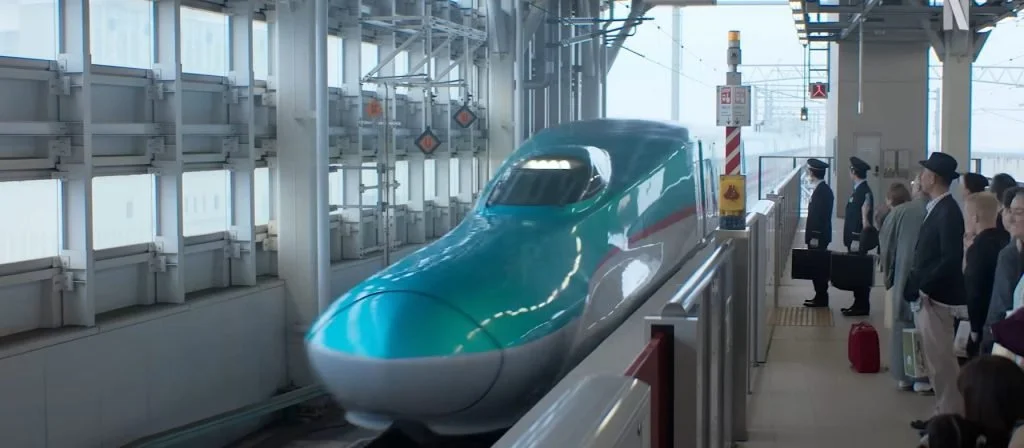
The editing is the opposite of the rapid-fire cuts we see in modern thrillers like Bullet Train Explosion. Shots are composed with depth and duration; we see foreground and background in sharp focus, and the camera lingers as characters move slowly in and out of frame. Many viewers may lose patience well before the end. My own mind wandered at times, and that’s when long-forgotten memories of my dad’s theater came to mind.
Goodbye, Dragon Inn is certainly not a crowd pleaser, but that’s fine with me. I watched it through my public library’s Kanopy subscription. Like Lux Æterna, it’s a pleasure to watch something occasionally that feels artistically bold and refreshingly out of the ordinary.
Review copyright 2025 by Dennis D. McDonald