Shinji Higuchi's "Bullet Train Explosion"
Movie Review by Dennis D. McDonald
This review contains spoilers and political commentary
At first, I was concerned that Bullet Train Explosion would devolve into a by-the-numbers Airport-style disaster film, complete with melodramatic soap opera elements and stifling bureaucratic inertia. I had flashbacks to the constipated government response scenes in Shin Godzilla, which Shinji Higuchi co-directed.. Fortunately, what unfolds is more sophisticated, despite some hyper-emotional character elements shoehorned in at the end.
The characters, while well-acted, tend to fade somewhat into the background as the bullet train races toward Tokyo—unable to slow down without triggering hidden terrorist bombs set to detonate if the speed drops below a certain threshold.
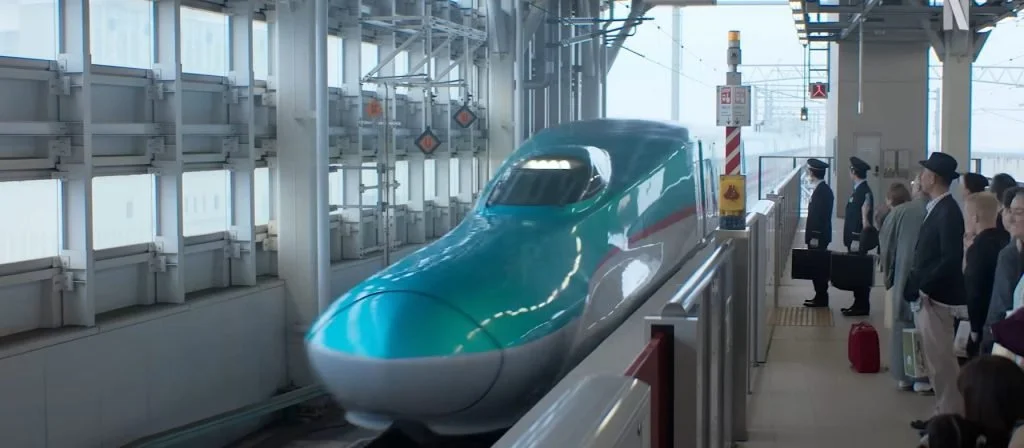
The cinematography is stunning. The sleek, high-speed train zips through the beautiful Japanese countryside, and when it blasts through stations, you can practically feel the wind on your face.
Inside the train, we meet a familiar but believable cast of characters: the stalwart conductor and train operator, the arrogant politician, the opportunistic entrepreneur, the fearful high school girls, and the dozing elderly passengers. Everyone gets a moment in the spotlight.
What truly sets the film apart are its production values and the intricate attention to the mechanics of high-speed train operations. It's often difficult to tell what’s real and what’s CGI—I kept asking myself, “Did they actually do that?”
The rescue planning scenes seem crafted by someone intimately familiar with Japanese train systems and infrastructure. Thankfully, the film avoids the tired "cut the red wire or the blue wire" trope. Combined with split-second editing and frequent scene changes, the film’s pacing is intense, keeping the viewer constantly engaged.
I watched the film in Japanese with English subtitles and had no trouble following along. The frequent use of model trains by the rescue team—as a visual aid to explain unfolding plans—was so effective that I suspect even without subtitles, an English-only viewer could still follow the story.
Still, I felt a twinge of melancholy by the end. The real heroes here are the planners and implementers of the rescue—not action stars, but professionals doing their jobs under immense pressure. Though we get the usual dose of Japanese anti-government skepticism, as seen in films like Godzilla Minus One, I couldn’t help but reflect on the present-day United States. With ongoing cutbacks in public health, education, disaster response, and scientific research, I wonder: if a similar terrorist attack occurred here, would we have the competence and resources to respond effectively? I’m starting to have my doubts.
Review copyright 2025 by Dennis D. McDonald