An Insurance Company CIO Talks About the "Baby Boomer IT Brain Drain"

Last week I interviewed “Boris” (not his real name) about his and his company’s handling of the pending retirement of senior IT staff who are critical to the maintenance and operation of a number of his company’s business-critical mainframe legacy systems. I was initially interested in learning whether Boris thought that modern social networking and collaboration tools might be useful in documenting and transferring the specialised expertise staff needed for maintaining critical systems. Instead, the discussion took a different direction and revealed some underlying issues that go beyond technology enabled knowledge sharing.

Back on July 17 I wrote about the potential impact of pending retirement related “baby boomer brain drain” on IT departments, especially those heavily invested in supporting legacy mainframe systems. As a followup I asked for research interviews with several CIO’s I know in order to get a better handle on the issue and to find out whether emerging Web 2.0 and social networking and collaboration technologies might be supportive of knowledge transfer to younger staff.
Professor David Wolber has used a social networking tool for people-tagging called Peoplicious to create an "expert systems" group -- "those interested in tools for locating experts" -- from the links included in John Tropea's survey article called The different ways of finding experts. One of my recent blog postings is included in the Tropea article, so I'm included in Wolber's "expert systems" group.
We hear a lot about the customer- and user-side benefits of Web 2.0 -- the collaboration, the rapid development and deployment, and the rapid formation of "communities" around common interests. As a change from this it's a pleasure to read some clear thinking about the business models that support Web 2.0, especially models associated with open source, software as a service, and software as an "appliance."
Once upon a time I helped manage a complex post-merger system consolidation project where two mainframe based systems were being integrated. The client hadn’t done a lot of projects like that and hired outside consultants to help with the project planning, management, and execution. We found out quickly that a few key client staff members were extremely scarce resources. One was a senior consultant who had been brought back by the client after his retirement. He was, hands-down, THE absolute expert on the target system’s very large and very complex database. I’ll call him “Alex.”
Wendy Piersall is one of many bloggers commenting about Friendster's being granted a patent by the US Patent & Trademark Office for an implementation of social networking. The Friendster patent claim was originally filed in 2003. The patent was issued in late June of this year. There are many interesting views floating around in the blogosphere about this, for example: * This is what happens when the patent examination process takes so long. * This will stifle innovation. * This will stimulate innovation. * Friendster's fortunes are in decline so it will have to take up suing people to make money. * Networking services like Linkedin will end up paying huge license fees and will have to shut down free subscriptions. * Some attorneys are going to make a lot of money over this.
Blogger Joe Gratz on July 9 reported that United States District Court for the District of Colorado has found that a company called "CleanFlicks" infringes copyright. CleanFlicks, without authorization of copyright owners, has been creating and renting censored DVD-R copies of movies that it created through modification (censoring) of the original audio and/or video.

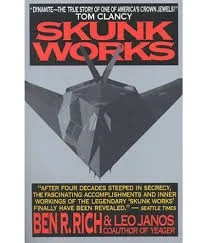
Comparing Eras of Innovation: 1950's Aerospace Advances and Today's Web

We are now in the midst of a very innovative period of social and technological change that is being partly driven by the increasing availability of web based tools that support the development of relationships, the sharing of information and experiences of all kinds, and the manipulation of information on a scale that was difficult to contemplate just a few years ago. The experiences we have online are taking on increasingly important roles in terms of individual emotions, financial consequences, and personal relationships. There have been other periods of intense social and technological innovation. One of my favorite ones for study is the post Word War II aerospace industry.