Writers: Do You Know Who Your Gatekeepers Are?
I write and publish here to share my thoughts and interests with others. Recently, two events have caused me to rethink my understanding of how well this process is working.
Hits from Singapore?
Event 1 occurred when I reviewed my Google Analytics profile and discovered a huge spike in hits on my website—from Singapore. With the aid of Google’s Gemini, I explored the significance of this spike and concluded that the source was likely a bot generating repeated automated visits with little or no recorded engagement. Diving deeper with Gemini revealed ways I could filter out repeat hits like these, but implementing them would require some tedious work on my part. I’m no dummy when it comes to statistics, but the fix seemed too much like real work, given that my website platform, Squarespace, already appeared to be screening out such automated hits. I decided to stick with the Squarespace numbers. My site has low traffic anyway, and as a lover of low-cost publishing who isn’t focused on advertising, I decided that the Google Analytics approach just wasn’t worth the effort.
Thousands of IP Addresses?
Event 2 occurred this past week when, looking at recent website traffic in Squarespace’s statistics, I saw another spike. This time, there were literally thousands of hits when I normally see hundreds. Furthermore, a large portion of the hits were on a still-public section of the website where I stopped publishing many years ago. And the vast majority came from IP addresses that appeared only once in the dataset I had downloaded.
Again, the traffic showed little evidence of meaningful engagement and appeared to have been generated largely by an automated process of some sort.
How to fix it?
Squarespace says mine is not the only site experiencing this and is looking into it. Unfortunately, I was also told that using custom code might help prevent such traffic, but Squarespace would not support that code. I’ve decided to wait and see what Squarespace does about this. They assure me they are working on it.
Again, I’m not selling advertising on this site. I like to write and share my thoughts on managing technology, books, movies, and media. Learning to code just to find out which articles are actually being read is not how I want to spend my “spare time,” such as it is. And changing a reliable website vendor after so many years is not in the cards!
So much automated traffic!
But these two events have raised some serious concerns about how the web works these days. With so much automated traffic (some industry estimates suggest that automated systems now account for roughly half of web traffic), how can anyone publishing on the web be sure that what he or she publishes is reaching the intended audience? Or at least an audience of real people?
Another issue is that “the web itself” is increasingly both producing and using information. A standard Google search can generate an answer automatically synthesized from information drawn from a variety of websites that the searcher may never visit. Those selling goods and services via the web are understandably concerned about Google serving as such a “gatekeeper” between them and their markets!
Can I trust the “gatekeepers”?
My more immediate concern as an independent writer and publisher is that I want people to read my stuff. If visits to my website are being generated by automated services that extract ideas and meaning from my words, how can I tell whether such “gatekeepers” will transmit my thoughts accurately and with appropriate attribution to me as the author? Are we getting to a point where posting something on the internet is becoming like putting a message in a bottle, tossing it into the ocean, and hoping someone will find it?
That’s admittedly an extreme view. It ignores the fact that the internet can also function as a vehicle for communication mediated by trust and real-world social interaction. That was originally my hope for social networking. Even there, however, we have seen how communication can be twisted and manipulated through propaganda and misinformation. (I have called this “social media decay.”)
Is something similar happening to web-based publishing, where an author can no longer be assured that his or her words will reach other humans—or that those words will be preserved rather than altered from what was originally written?
Who are the “trusted partners”?
Part of the answer might be to seek out and rely only on trusted partners when publishing on the web, while also expecting accurate and complete information about how our words are passed along by intermediary gatekeepers. Unfortunately, my recent experience with my own website suggests that we may be a long way from achieving this.
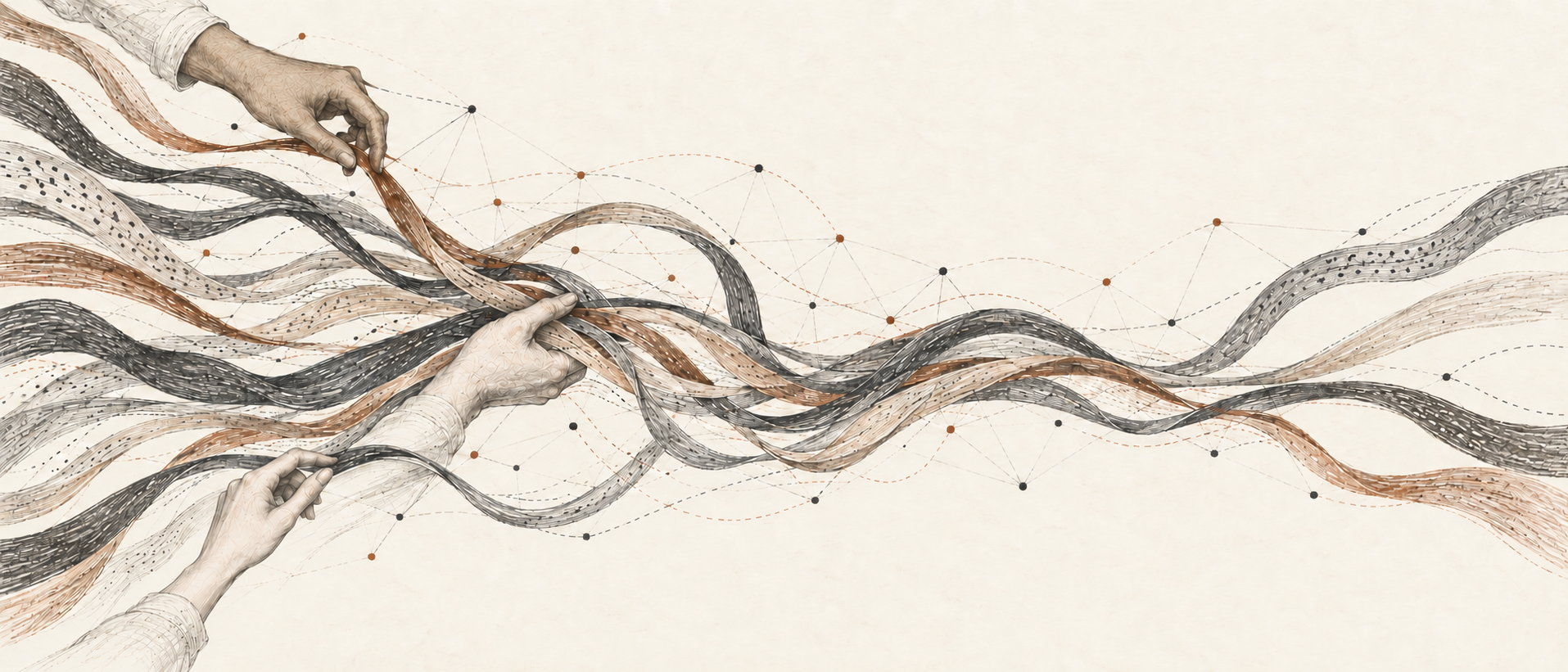
Copyright © 2026 by Dennis D. McDonald. I developed the article's ideas through research and discussion assisted by AI, composed and wrote the original draft myself in longhand, then used ChatGPT to convert the scanned hand-written pages and to help edit the manuscript for clarity, grammar, technical accuracy, and consistency. I reviewed the suggestions, made further revisions, and retained responsibility for the final text. Also, Gemini generated the image at the top of the page from within Gmail based on a brief discussion about the concept of “gatekeepers” between authors and readers.