Are you building new systems around old processes?
AI can help modernize and integrate underlying systems, but changing the business processes they support remains the harder—and more important—job.
Years ago, when I regularly did corporate IT strategy work, it was not unusual to find major companies generating unified monthly financial reports across multiple divisions using massive spreadsheets. These were laboriously constructed—sometimes manually—from files produced by different systems with different data formats and definitions. Sometimes the data transformations were automated, but often they were not.
I remember one client where we were asked to estimate the savings from consolidating major software systems. Doing so required inserting ourselves into the monthly manual financial consolidation process as unobtrusively as possible.
Easier said than done. On one of my first days, I walked into a large office area and found more than a dozen junior analysts, all recruited from a major financial firm that shall remain nameless, laboring over the monthly consolidated report. They were converting data for loading into one massive spreadsheet used to generate the report.
The whole process was a bit problematic. Based on my experience with systems integration projects, I knew that a change in one system, if not caught in time, could cause chaos in the final consolidation steps. My immediate concern was somehow extracting IT-related costs from those multiple systems. That process turned out to be every bit the challenge I had anticipated.
That was a long time ago, but the image of that massive, bloated spreadsheet has remained in my mind—along with the army of eager young analysts laboring away with their macros and conversion steps.
Things are different today, thank goodness. Spreadsheets are certainly much smarter and more sophisticated than in the olden days. Individual cells can trigger AI routines that respond much more quickly to upstream changes. AI tools may also have been used in developing, updating, and testing the software changes themselves. Data integration or transformation projects that used to take months can now be accomplished (at least the data and software portions) in weeks or day, not months.
AI-based software, with its rapid responsiveness to change, has not only made that army of cheaply paid analysts unnecessary but has also reduced demand for replacing multiple systems with a single unified system. Changes in individual systems can now be addressed faster. Add the real-time interactivity of contemporary AI tools, and the need for management to even see that massive, unified spreadsheet may have gone out the window. Why look at rows and columns of data when the AI will “automatically” create an interactive dashboard for you to play with at your leisure?
Still, AI based software and data transformation projects haven’t totally done away with the risks associated with complex system integration work:
There is the question of necessary process change and the need to incorporate human judgment at key points. We know that changing systems can be closely tied to the need to changing human processes. Automating the planning and management of those process changes can also be tricky.
Even when AI tools simplify the integration of data-intensive systems across organizations—for example, when two or more companies' IT operations are consolidated in connection with a corporate merger—we still have to deal with the different goals and objectives of the management teams that ran those companies. AI tools can certainly help, but human goals and objectives are harder to consolidate than data definitions. How the AI tools are used—and how much autonomy they have—can also become a bone of contention when operations are being merged.
When data from multiple systems and processes are consolidated, where should human judgment enter the process? Some decisions must be made instantly: what to project on the heads-up display of a supersonic fighter targeting an opponent in aerial combat, or how to respond to a cyberattack threatening to shut down a hospital's automated pharmaceutical management systems. At what point does inserting a “human in the loop” become impossible, and at what point is it absolutely essential?
The army of junior analysts laboring over that huge, bloated spreadsheet did not have to worry about such questions which were far beyond their pay grade. My team and I, inserted into the reporting process after the fact, certainly could have used modern AI tools to help us out!
Today, of course, such questions like “how much are we spending on IT across all divisions?” can be answered much more quickly using modern tools even when the source data are messy, come from multiple and/or legacy systems, rely on both structured and unstructured files, and contain a mix of digital and graphic images. The question then becomes, how does the organization then use that new data — and make the necessary changes to underlying business processes that take advantage of all these new insights?
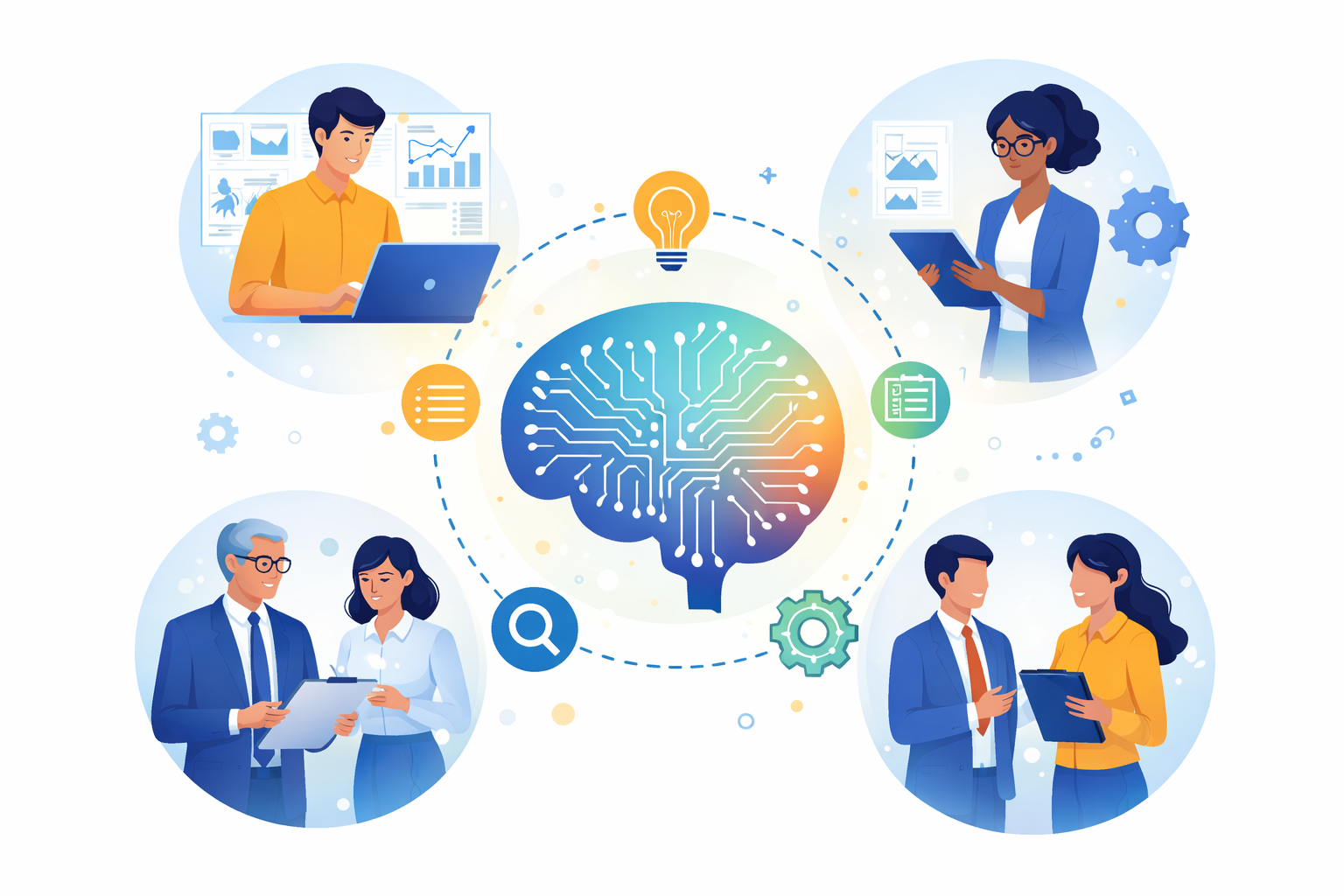
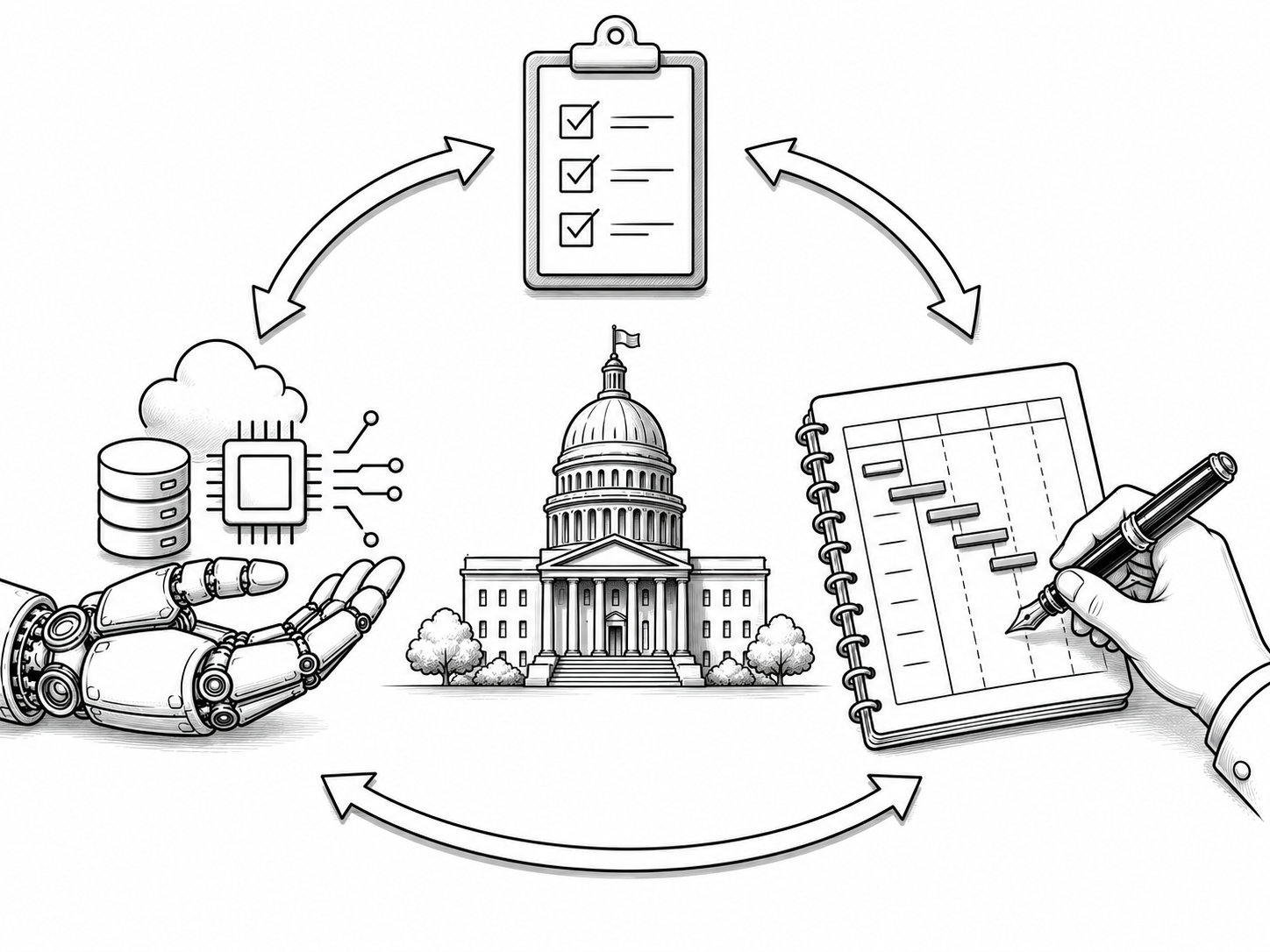
Copyright © 2026 by Dennis D. McDonald. The above graphic was generated by ChatGPT after a lengthy dialog that started with my typing “I need a clean, simple abstract graphic to illustrate the above concept of using AI to consolidate systems and processes -- but somehow making sure to incorporate human judgement when necessary and appropriate. Any suggestions for how to proceed with that?”