« Lawrence Lessig Shifts Gears | Main | Are Collaborative Systems Good for Outsourcing? »
Tuesday
Jun192007

A Short Definition of "Strategic Planning"

By Dennis D. McDonald

A while back I wrote How To Develop a Business-Aligned Social Media & Social Networking Strategy which described a structured approach to strategic planning. That turned into a 2,200-word white paper and described a process for situations where a structured development process might be called for. This is how I described it:

Some organizations develop strategies for adopting social media and social networking based on an informal process that proceeds spontaneously and with minimal central coordination. Others prefer a more formalized process, especially in situations where management recognizes the potential for impacting so many different corporate functions. This paper is intended for the latter group.

I recently had an opportunity to write a brief description  of strategic planning. Here it is:

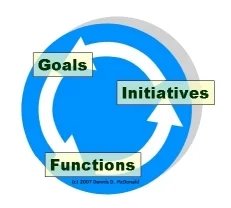
A strategic planning process delivers a set of defined initiatives (projects) that achieve a desired set of business goals. The planning process involves a definition of these business goals, an assessment of the resources available for meeting these goals, and the definition of specific plans (initiatives) that are designed to achieve the goals. The process usually incorporates a ranking exercise that identifies the highest priority initiatives.

Copyright (c) 2007 by Dennis D. McDonald

PrintView Printer Friendly Version

EmailEmail Article to Friend

Reader Comments (8)

Dennis,
Good definition. I recently wrote a post about why business plans simply do not meet the average business person's needs and strategic plans are the preferred method to achieve business growth. The release of QuickPlanner Plus <www.quickplannerplus.com> is the first step in helping small business people to get that first incremental step into the effective strategic plan.
Matson
November 7, 2007 | Unregistered CommenterMatson Breakey
Hi Dennis,

I like your definition of strategic planning.

StrategyDriven contributors believe a company’s true value is largely determined by its long-term performance potential as shaped by management’s decisions made today. These decisions guide the translation of the company’s mission, its purpose for existing, into the products and services it provides and hopefully the market wants.

Strategic planning is an iterative, ongoing process consisting of:

* Analysis: assessment of the internal and external factors effecting the organization’s ability to achieve its mission

* Alternative Development: detailed assessment of the costs, benefits, and risks associated with strategic alternatives including both major, ongoing and newly proposed activities

* Alternative Selection: identification of the current portfolio components and proposed activities that will be pursued and the timeframe for execution

* Resource Projections: aggregation of the personnel, financial, physical, and technological needs including an assessment of the ability to acquire these resources within the needed timeframe

* Plan Development: final validation of the organization’s mission and compilation and approval of its long-range and annual business plans

Execution of these iterative processes takes place throughout the year with a frequency dictated by the pace of market change.

The StrategyDriven website (www.StrategyDriven.com) is dedicated to providing executives and managers with the planning and execution tools needed to create greater organizational alignment and accountability for the achievement of superior results.

Our contributors believe creation of a clear, forward-looking strategy, translatable to the day-to-day activities of all organization members, is critical to realizing success in today’s fast paced market environment. Not only does a compelling, well executed strategy align individuals to a common purpose, it ensures that purpose best serves the company’s mission.

We look forward to your joining our strategic business planning and tactical execution conversation.

All the Best,
Nathan
Principal Contributor
StrategyDriven

www.StrategyDriven.com
May 27, 2008 | Unregistered CommenterNathan Ives
Nathan, thank you for your contribution. The themes I especially like in your text include "ongoing" and "translated into action."
May 28, 2008 | Registered CommenterDennis D. McDonald
I also like your definition of "strategic planning" but I have a question centered around not so much what is achieved but how and with whom the document is constructed. In my expereience of over 20 years in local government and non profits, the process includes key staff members, director, administrator, board members and elected officials. Currently I have a two person committee that has chosen to meet and craft a strategic plan for the next 10 years without including anyone else. The plan was brought forth for comments from staff and the board of directors. In reading the 7 page document I find about 80% of it to be useless. The content is useless because it does not include any understading of how the organization works. It is clear to me that this process can not be successful without including everyone in the process. Your thoughts please.
January 27, 2011 | Unregistered CommenterVicky, Non-profit Director
Vicky, check this out to see if it helps:

"How To Avoid Common Strategic Planning Mistakes"

http://www.ddmcd.com/managing-technology/how-to-avoid-common-strategic-planning-mistakes.html

Best wishes,

Dennis
January 27, 2011 | Registered CommenterDennis D. McDonald
Actually, I'm not crazy about your definition. It sounds more the definiton of a business plan. I draw a distincition. In my world, the Board owns the Strategic Plan and the Executive and staff the business plan. The board should not be concerned about the how but the what. The high level Strategic Issues - that confront an organization. The staff then figure out how to address these. My 2 cents
October 10, 2011 | Unregistered CommenterPam
Pam -

I understand the theoretical distinction between the board and the executive but in practice if the executive doesn't understand the linkage between the strategic plan and the business plan the probability of success will be reduced. This is why I think the planning process should include both strategic and tactical elements.

Thanks for your comment!

- Dennis
October 10, 2011 | Registered CommenterDennis D. McDonald
Thank you Donald. A perfect explanation. I searched high and low for something succinct, and here you have it. Much appreciated.
February 21, 2012 | Unregistered CommenterYasmine

PostPost a New Comment

Enter your information below to add a new comment.
Author Email (optional):
Author URL (optional):
Post:
 
All HTML will be escaped. Hyperlinks will be created for URLs automatically.