We hear a lot about the customer- and user-side benefits of Web 2.0 -- the collaboration, the rapid development and deployment, and the rapid formation of "communities" around common interests.
As a change from this it's a pleasure to read some clear thinking about the business models that support Web 2.0, especially models associated with open source, software as a service, and software as an "appliance."
The July 24 print edition of the Wall Street Journal (Robert A. Guth's "Is It Time to Dump Your Desktop," page R1) provides an overview of the current state of web-served replacements for typical desktop applications like spreadsheets, word processors, and email.
Paul Carney provided this insightful comment on my earlier post titled What if Communities Don’t Share Their Expertise?:
Keeping people connected in order to share expertise is a great idea, but the problem is that those people who have a large amount of knowledge tend to grow very large networks.
Once upon a time I helped manage a complex post-merger system consolidation project where two mainframe based systems were being integrated. The client hadn’t done a lot of projects like that and hired outside consultants to help with the project planning, management, and execution.
We found out quickly that a few key client staff members were extremely scarce resources. One was a senior consultant who had been brought back by the client after his retirement. He was, hands-down, THE absolute expert on the target system’s very large and very complex database. I’ll call him “Alex.”
My friend Luis Suarez takes me to task for my post on expertise managment. He makes some very good points but I differ somewhat with how he interprets the role of “communities” within an organization. He says:
Wendy Piersall is one of many bloggers commenting about Friendster's being granted a patent by the US Patent & Trademark Office for an implementation of social networking. The Friendster patent claim was originally filed in 2003. The patent was issued in late June of this year. There are many interesting views floating around in the blogosphere about this, for example:
* This is what happens when the patent examination process takes so long.
* This will stifle innovation.
* This will stimulate innovation.
* Friendster's fortunes are in decline so it will have to take up suing people to make money.
* Networking services like Linkedin will end up paying huge license fees and will have to shut down free subscriptions.
* Some attorneys are going to make a lot of money over this.
Blogger Joe Gratz on July 9 reported that United States District Court for the District of Colorado has found that a company called "CleanFlicks" infringes copyright.
CleanFlicks, without authorization of copyright owners, has been creating and renting censored DVD-R copies of movies that it created through modification (censoring) of the original audio and/or video.

Enterprise Expertise Management Systems and Organizational Reality
Some of the early feedback I’m getting while researching and writing about enterprise expertise management systems is that some types of organizations might view them as disruptive. The purpose of this brief article is to discuss how this might be true in certain situations.
Here’s a dissertation worth looking at: Design, Implementation, and Evaluation of Weblogs as an Enterprise Project Management Communication Tool, by Marcus J. A. Peaston. It’s a Master of Science dissertation dated February 15, 2006 submitted to The University of Liverpool.
OK, call me clue less. But I don't care if Amanda is leaving Rocketboom. It's about as important to me as Katie Couric moving to the network evening news.
Ed Felten in the Freedom to Tinker blog has an interesting post called Why do Innovation Clusters Form? where he comments on a recent conference he attended devoted to high tech innovation and public policy.

Comparing Eras of Innovation: 1950's Aerospace Advances and Today's Web
We are now in the midst of a very innovative period of social and technological change that is being partly driven by the increasing availability of web based tools that support the development of relationships, the sharing of information and experiences of all kinds, and the manipulation of information on a scale that was difficult to contemplate just a few years ago. The experiences we have online are taking on increasingly important roles in terms of individual emotions, financial consequences, and personal relationships.
There have been other periods of intense social and technological innovation. One of my favorite ones for study is the post Word War II aerospace industry.
Have we reached a "tipping point" for enterprise acceptance of Web 2.0? According to Martin LaMonica's Corporate America Wakes Up to Web 2.0, published June 26, 2006 on ZDNet News, we may have.
Tracy Coenen’s FRAUDFILES blog is this week’s Linkedin Bloggers Blog Boost target. I’ve read a number of the postings on her blog and have learned a lot in the process about “forensic accounting” that I did not know before.
I'm using Raw Sugar as a research tool. Here's what I added to my Raw Sugar directory as a description:
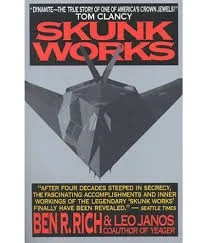
Expertise, Skunk Works, and Project Management
I've been researching concepts like "expert management systems," "expert location," and "expert locator systems." My goal is to get a handle on the state of the art as it might be impacted by current social networking and collaboration technologies.
Duke Law’s Center for the Study of the Public Domain has published a comic book titled Tales from the Public Domain: BOUND BY LAW? A cross between a superhero adventure and the Crypt Keeper, the comic tells the story behind the knotty copyright, public domain, and fair use issues associated with contemporary documentary production.
Every now and then it helps to be reminded of the basics:
* Make the phone call.
* Get the face to face meeting.
* Thank the prospect.
* Have your elevator speech ready.
* Offer to help.
* Keep in touch (Garrison Keillor's suggestion).
* If you can't say anythng nice about somebody, don't say anything at all (My mom's suggestion).

Expertise Management and World of Warcraft
While researching the topic “expertise management” as a follow up to earlier articles posted here, I came across a fascinating article concerning the automated construction of an “expertise database” that I think has some relevance for enterprise expertise management.
I recently wrote here about using social networking and information technology to improve access to expert knowledge within the enterprise. Luis Suarez has also commented about the "knowledge management" aspects of this idea.
An interesting experiment incorporating some of these ideas is already underway here in the United States -- the Peer to Patent Project.