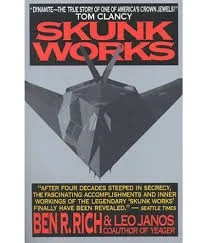
Comparing Eras of Innovation: 1950's Aerospace Advances and Today's Web

We are now in the midst of a very innovative period of social and technological change that is being partly driven by the increasing availability of web based tools that support the development of relationships, the sharing of information and experiences of all kinds, and the manipulation of information on a scale that was difficult to contemplate just a few years ago. The experiences we have online are taking on increasingly important roles in terms of individual emotions, financial consequences, and personal relationships. There have been other periods of intense social and technological innovation. One of my favorite ones for study is the post Word War II aerospace industry.
In the first article in this series I commented on the web based evolution of systems for matching up experts (and their expertise) with users based on relationship management and social software technologies. In this article I discuss the implementation of such systems within large organizations
Remember near the end of the first MATRIX movie, our heroes were fighting it out on the roof of an office building. They needed a helicopter – fast: * Tank: Operator. * Trinity: Tank, I need a pilot program for a V-212 helicopter. Hurry…. Let’s go. Trinity, already a member of a tightly knit community, knew the right person to call, got a download of her program, and the rest is history.
We (Martin McKeay, Dan Sweet, Robyn Tippins, Jeremiah Owyang, and I) had fun schmoozing about three topics last Saturday: (1) HP's planned reduction in telecommuting, (2) Technological threats to the continued relevance of corporate marketing departments, and (3) Increasing incompatibility in how individual web based accounts are handled.
I've been thinking some more about the issues raised in my earlier posting The Inevitablility of "Too Many Gateways". One of the reasons the situation exists, as Ismael Ghalimi described where he has to maintain many separate accounts to manage different internet gateway services for feeds and data exchange, is that it's becoming increasingly possible to create such services and to make then available on the web.
Bloggers are commenting (e.g., here) on the replacement of Times New Roman as the default font in the beta version of Microsoft's Office 2007 released earlier this year. An initial lamentation is that the new font sets may not be available for the Mac without separate licensing. The deeper significance of this move may be that a serif font is being replaced by a sans-serif font, perhaps because the sans-serif font is easier to read on screen. So, who cares about fonts, anyway? Well, I certainly do, ever since my introduction to the Mac back in the 20th Century.
In the old days of planned release schedules and successively more capable release functionality, the term “beta” was applied typically to limited-release software where both distribution and user environments were tightly controlled and monitored. Nowadays businesses are being built upon “beta” software that goes into universal web wide availability along with statements of incompleteness and limited support. Users are invited to use and write about the software. Users get early peaks at and access to useful features. Producers get real world feedback which helps further the development of future releases.
Within one week of coming home after a successful first year at Virginia Tech, Number One Daughter started her Summer job hostessing at a large and popular riverfront restaurant in Old Town Alexandria. While driving her to work one day, I asked her how things were going at the job. The conversation that followed reminded me several things relevant to intelligent management practices.
Lately I've been reading Ross Mayfield's Weblog, which I discovered while tracking back an incoming link from him to an earlier posting of mine, Corporate Resistance to Enterprise Web 2.0. Mayfield is CEO of Socialtext and has feet (literally) in both the development and business worlds when it comes to real world applications related to Enterprise Web 2.0. I like how he thinks and writes about enterprise adoption of systems and processes based on Web 2.0 technologies.