Watching Martin Scorsese's "THE AGE OF INNOCENCE"
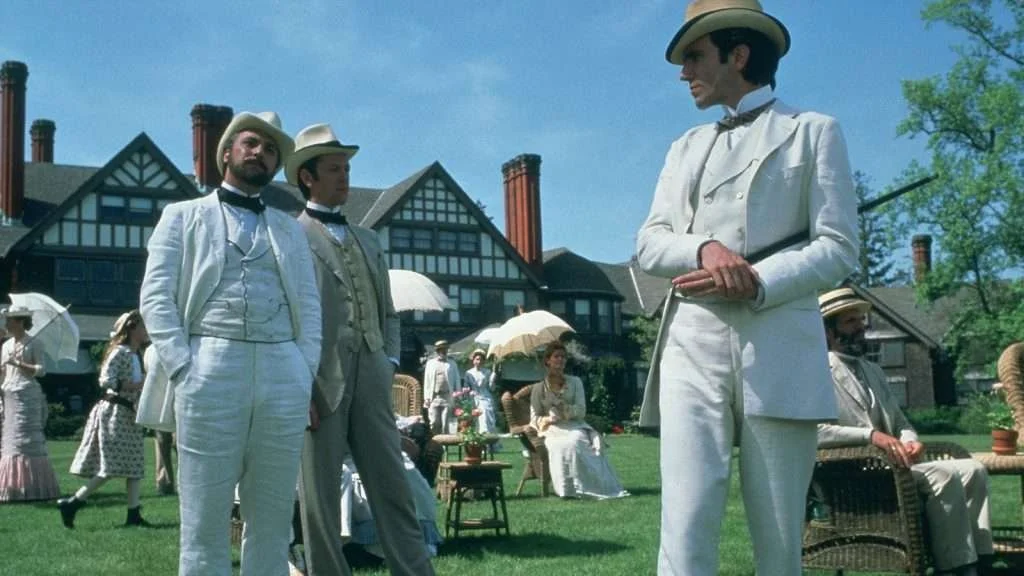
Watching Martin Scorsese’s The Age of Innocence last night, I was impressed by the production values and artistry—especially the lengths to which the director went to present (and perhaps smother?) the viewer with the physical trappings of 1870s New York high society.
While I’m sure the social commentary is insightful and trenchant, I was ultimately left with the impression: Why should I care about this? And, Why should I find this entertaining?
I certainly respect the artistry, but I was left cold by the whole experience. Even if I acknowledge the realism of the underlying story and the accuracy with which the varied personalities are portrayed, I still wasn’t engaged.
Reading Roger Ebert’s review afterward (he considered the film one of Scorsese’s best), I was struck by his comment on how faithfully the film captures Wharton’s novel.
If that’s the case, what’s the point of devoting such massive artistic resources to reproducing another artist’s vision?
My reaction mirrors how I felt when I first saw Mike Nichols’ Catch-22. Having loved Heller’s original novel, my response to that film was similar: This adds nothing to Heller’s artistic vision. It’s beautifully and elaborately produced, but it mainly gives physical form to the author’s ideas. What’s the point?
But, who am I to criticize the work of an artist like Martin Scorsese?
One answer to that question is: Because my time is limited, I must choose my artistic diversions wisely.
© 2025 Dennis D. McDonald