AI-Driven Meeting Tools Can Transform How We Collaborate and Share Information
Meetings!
At a dinner party last night, a friend—an executive at a manufacturing firm—admitted she sometimes dozes off during long videoconference meetings, even though she knows they’re crucial for information sharing. Her comment reminded me of my own experience using technology to support collaboration.
Years ago, I was captivated by the potential of social media to improve project management. I believed that open information sharing and a willingness to collaborate are essential for project success. That belief led to consulting engagements with both social media vendors and large organizations looking to improve internal communication.
Enabling is insufficient
I quickly learned that enabling collaboration wasn’t enough. Without strong leadership it was nearly impossible to overcome barriers like resistance to change, reluctance to adopt new tools, privacy concerns, organizational silos, and rigid role hierarchies.
To truly benefit from collaboration tools, people must be both willing and able to share. And the tools themselves must be easy to adopt and use—otherwise, old habits quickly return. Even small hurdles can derail implementation.
Fast-forward to today
Modern collaboration platforms—group chats, embedded messaging, and AI-enabled meeting tools—make knowledge sharing easier and more efficient than ever.
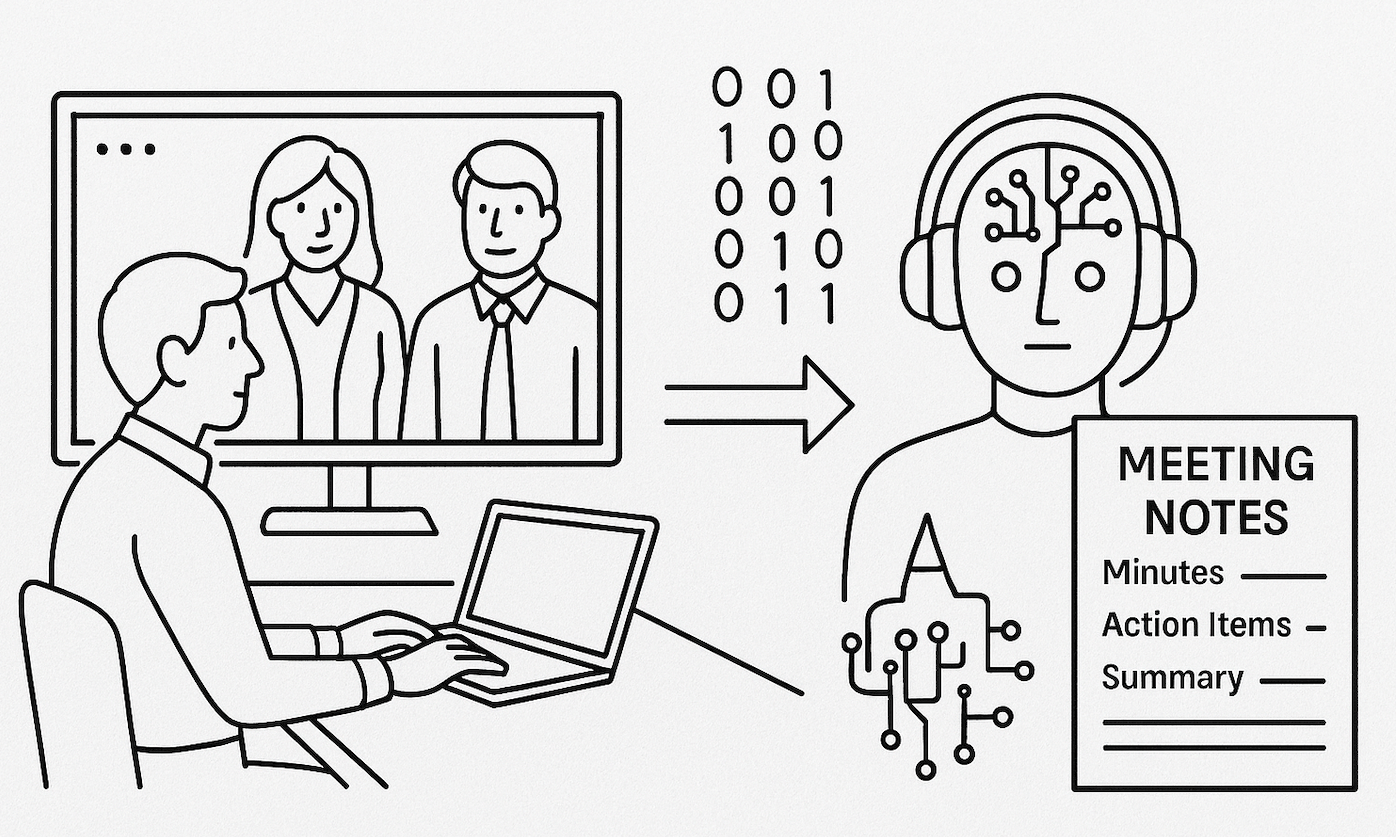
AI-driven meeting support tools, in particular, are game-changers. These systems can generate meeting minutes, action items, and discussion summaries almost instantly. Participants can quickly see what was discussed, what decisions were made, and who’s responsible for follow-up.
Having written meeting minutes for technology projects and nonprofit boards, I’m impressed. These tools have the potential to revolutionize how information is captured, shared, and acted upon across organizations.
But, there be caveats!
Meetings still require preparation. Participants need to read materials and come prepared—AI doesn’t fix poor planning.
AI-generated content still needs human oversight. It’s not just about fixing errors; it’s also about catching subtleties and political nuances.
Action items must be followed up. AI can list them, but management must still prioritize and allocate resources.
Context and confidentiality matter. Sensitive discussions—especially strategic or exploratory ones—require careful alignment with corporate goals, privacy standards, and potential legal discoverability down the road.
Language matters. Professional communities speak different languages. What is commonly udnerstood in one might be unintelligible to another. Tools must accommodate such differences.
More than just minutes
Looking ahead, it’s easy to imagine using AI tools to manage more than just meeting minutes. Think about specialized capability statements, resumes, job descriptions, project summaries, research notes, and external resources—all intelligently organized, linked, and searchable. Others have imagined this too, but the difference now is that the tools are finally capable of delivering on that vision.
“The man with the oily rag”
One of the biggest advantages? These tools can work in the background—indexing, connecting, and organizing content at scale. It’s like an invisible “man with an oily rag” working quietly behind the scenes to keep a large and complex group of interrelated machines running smoothly and quietly. That’s critical for making dynamic, ever-changing information truly usable.
Still, challenges remain. Effective systems often need to run on a common platform, and interoperability across tools is a persistent hurdle. Different systems speak different languages, and seamless integration is far from guaranteed. AI helps, but 100% transparency and compatibility remain elusive.
Drawing the line
Another limitation: AI doesn’t understand your business priorities. No executive would outsource strategy to a consultant alone—and the same logic applies to AI. Even the smartest systems may not fully grasp leadership’s vision or long-term goals.
The future
That said, with thoughtful implementation and strong oversight, AI can dramatically improve how we manage projects—and even entire organizations. In the meantime, I’m excited about how these tools can make our meetings a lot more valuable. Maybe they will even tell us when attendees appear to be sleeping!
Copyright © 2025 Dennis D. McDonald