Thoughts on rereading “MOBY-DICK”
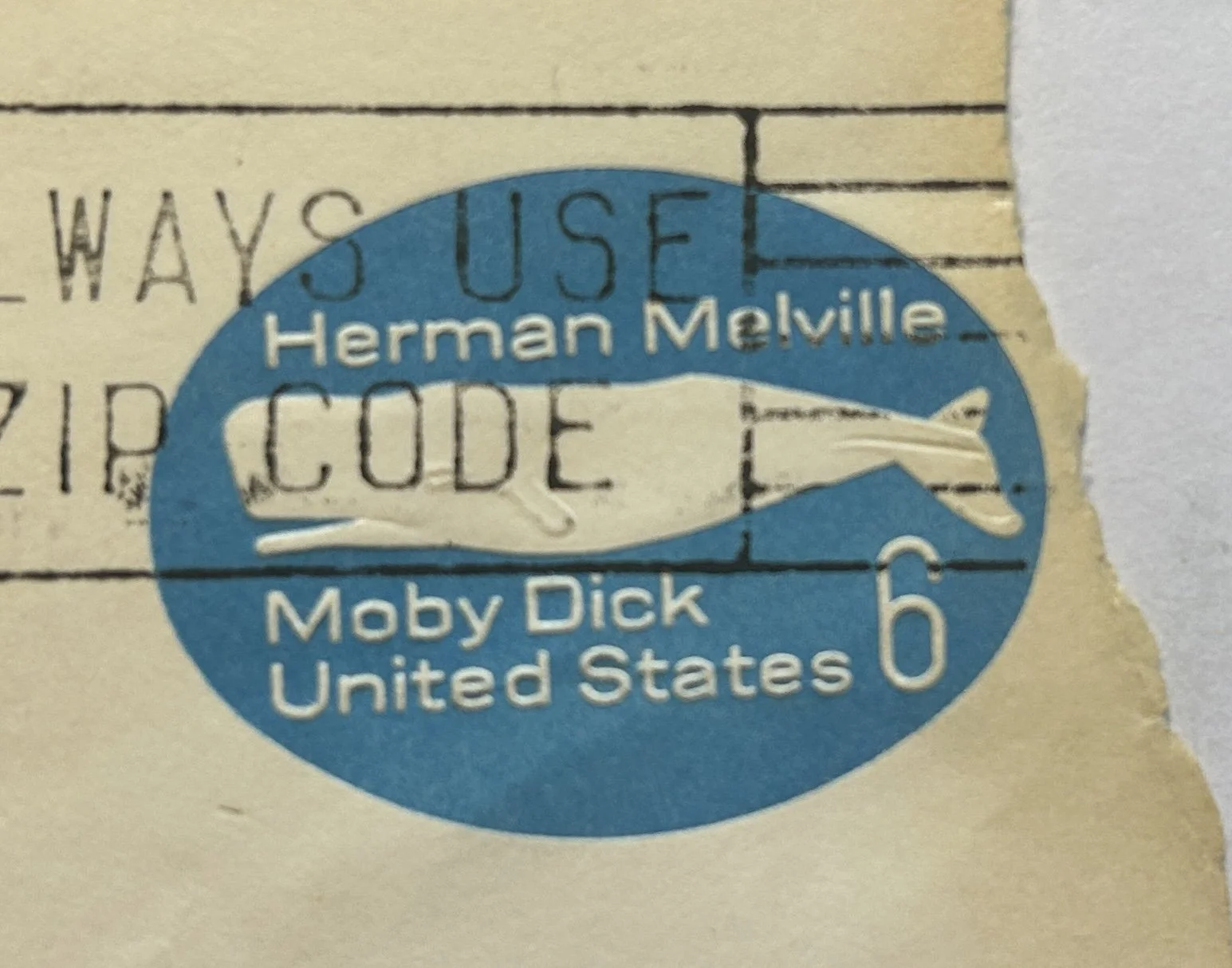
I first encountered MOBY-DICK in my undergraduate American literature course at Ohio State University. I remember being impressed by it, reading it on the long bus rides to and from my library job and off-campus apartment. My instructor really liked my final essay about the book and wrote me a nice note mailed in a commemorative MOBY DICK envelope.
Fast forward to today, half a century later. In my push to reread more of the classics, I’m rereading MOBY-DICK, and I am impressed with the story and the writing, even though I’m only 60% through the book. Melville was only 32 years old when he wrote this, but his powers of description, character development, action, and knowledge integration are prodigious. This guy must have done a lot of reading, drawing as he does from a vast array of knowledge sources and memories of personal experience.
Yes, there is a lot of text about whales and whaling here, some of it speculative and some of it probably superseded by a more accurate scientific understanding of these mammals. Were all this to be written today as fiction, though, we would have to be impressed with the incredible world-building on display. The central theme of the book—Ahab’s pursuit of the White Whale—is grounded in amazing details about industry, the economy, sociology, history, science, and philosophy. Melville imbues Ahab’s folly with layer upon layer of reality, punctuated by episodes of action that, in my opinion, are simply stunning in their physicality and sheer excitement. Humans actually pursued, captured, and butchered whales, and rendered their flesh into oil for lamps, like this! Which is the stranger story—Ahab’s pursuit, or the world in which the novel’s events take place?
One question that comes to mind is, why should books like this still be read? Specifically, why should students be required to read such works as a standard part of what we call a ‘liberal education’?
That’s too complex a question to really address here; let’s just say that I believe such readings are still very much worthwhile because they provide insight into how ‘the human condition’ has evolved. They help us understand where we have come from and where we might be going. Some things change and some things remain the same.
I was fortunate in my own education (and in my upbringing in a very reading-oriented family) to be exposed to a very wide range of literature, of which Moby-Dick is only one example. One regret I do have is that my exposure to classics outside American, European, and Russian literature has been limited. Hopefully, this is a limitation I can still address.
Copyright © 2026 by Dennis D. McDonald