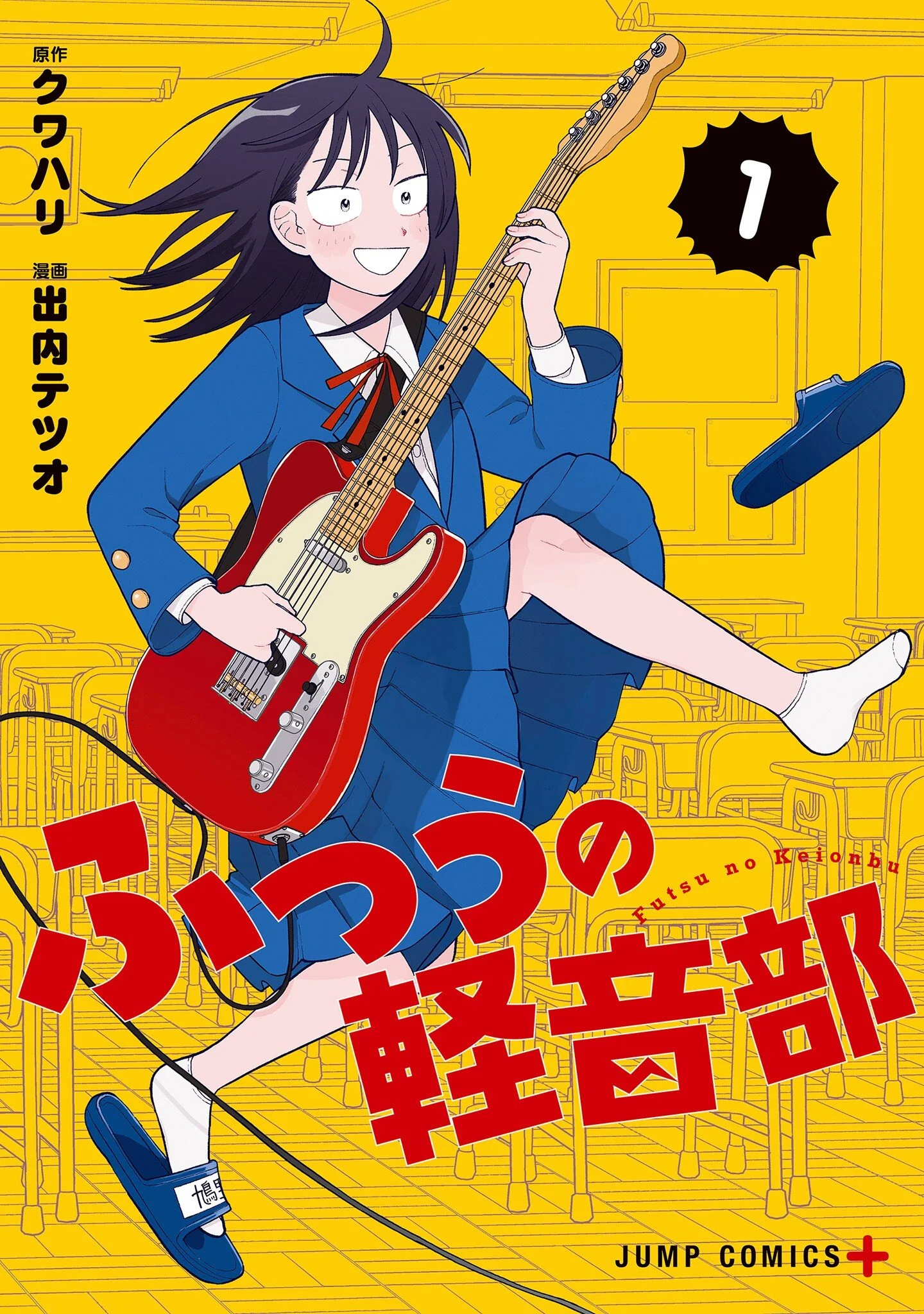
Kuwahali & Tetsuo Ideuchi’s “Girl Meets Rock” (Manga Vol. 1)
Book review by Dennis D. McDonald (English language version)
Chihiro Hatono is a shy and somewhat introverted girl who enters her first year of high school and decides to buy a guitar. She joins the school’s “light music club,” one of the many extracurricular activities all students are encouraged to join at her high school in Osaka, Japan. Soon she joins a small band, and so her adventures in this manga begin.
We soon see that Chihiro is pushing herself to be “out there.” While she has her share of self-doubt, the book does a great job of contrasting her words and behavior with what she is really thinking.
I admit some surprise at the emotional complexity the book portrays. There is much self-doubt expressed by Chihiro and the other kids as they navigate their involvement with struggling “bands” and school activities. People are not always as they seem on the surface, something Chihiro discovers repeatedly with the other kids. Interestingly, her parents’ going through a divorce, while painful for her, is not at the center of the emotional life portrayed in the book. The reader can infer, though, that pushing herself into music and the band may be one way she is dealing with that emotional experience.
As distant as I am in years from adolescence, I was impressed by how complex and rich the emotions and relationships are portrayed. It’s easy to think that the situations on display are isolated and protected; these are just high school kids, right? Yet it is refreshing to see that the manga’s storytelling does not talk down to them. They are struggling and have to find their own way—with or without the help of adults.
There were a few instances where my lack of familiarity with Japanese customs caused some confusion, but for the most part I found the situations and emotions on display here quite recognizable.
I do have two criticisms of the book.
First, the character designs need more work. Perhaps this will improve in future volumes of the series. The artist makes ample use of Japanese-style exaggerated facial expressions to display emotions. Unfortunately, the frequent lack of detail in faces, as well as a lack of fluidity in body positions, sometimes causes confusion about who is acting. Head-on facial drawings are well done, though, with hairstyles usually making character recognition easier, given the similarities in body types and clothing.
Second, I wonder whether the number of different characters portrayed here is a bit of an overreach, given that much of the drama arises from emotional interactions among the characters. Perhaps the story arcs would be easier to follow with fewer characters. But since this is the first volume in a series, introducing a large cast may be inevitable.
In summary, I found the book very engaging. It is easy to root for Chihiro despite her self-doubt and emotional complexities. Plus, a surprise twist at the end makes me want to read Volume 2!
Review copyright © 2026 by Dennis D. McDonald